
Last updated November 16, 2026
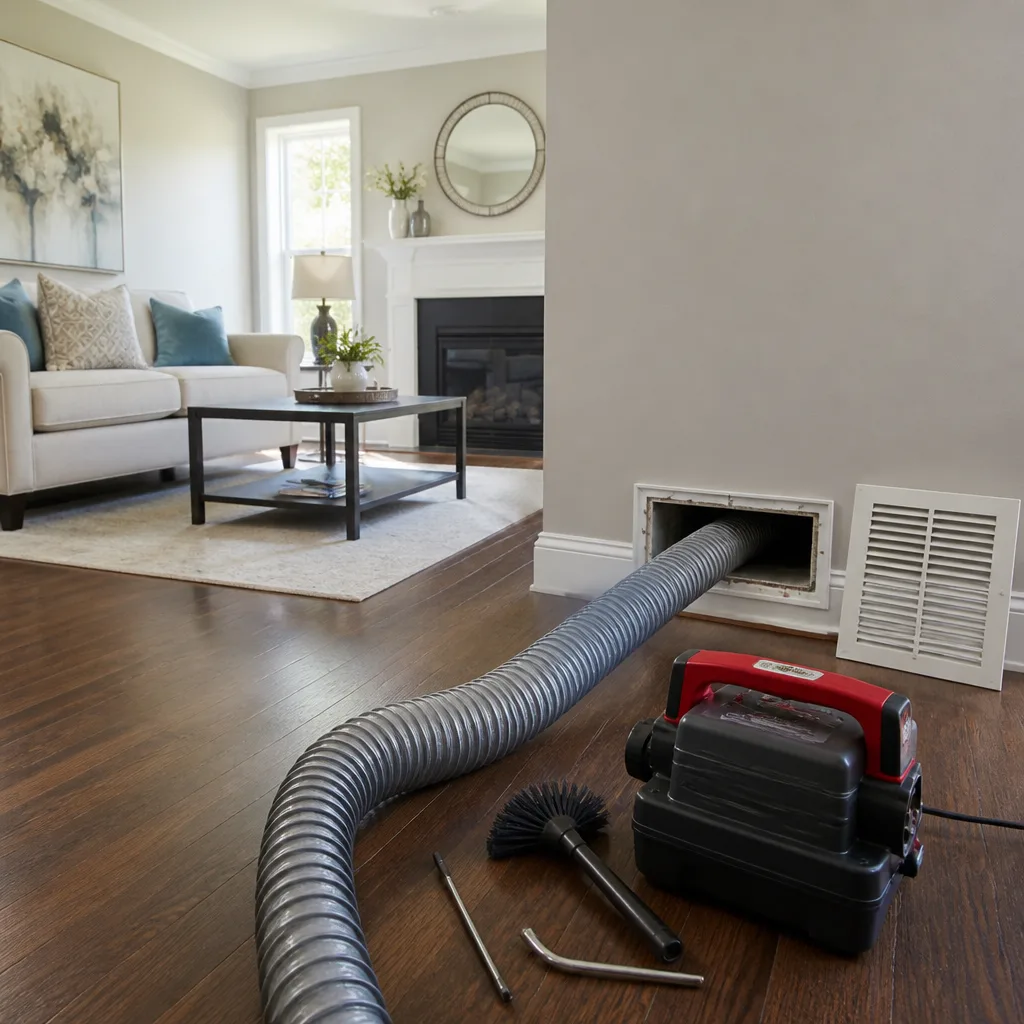 Whole-home duct cleaning
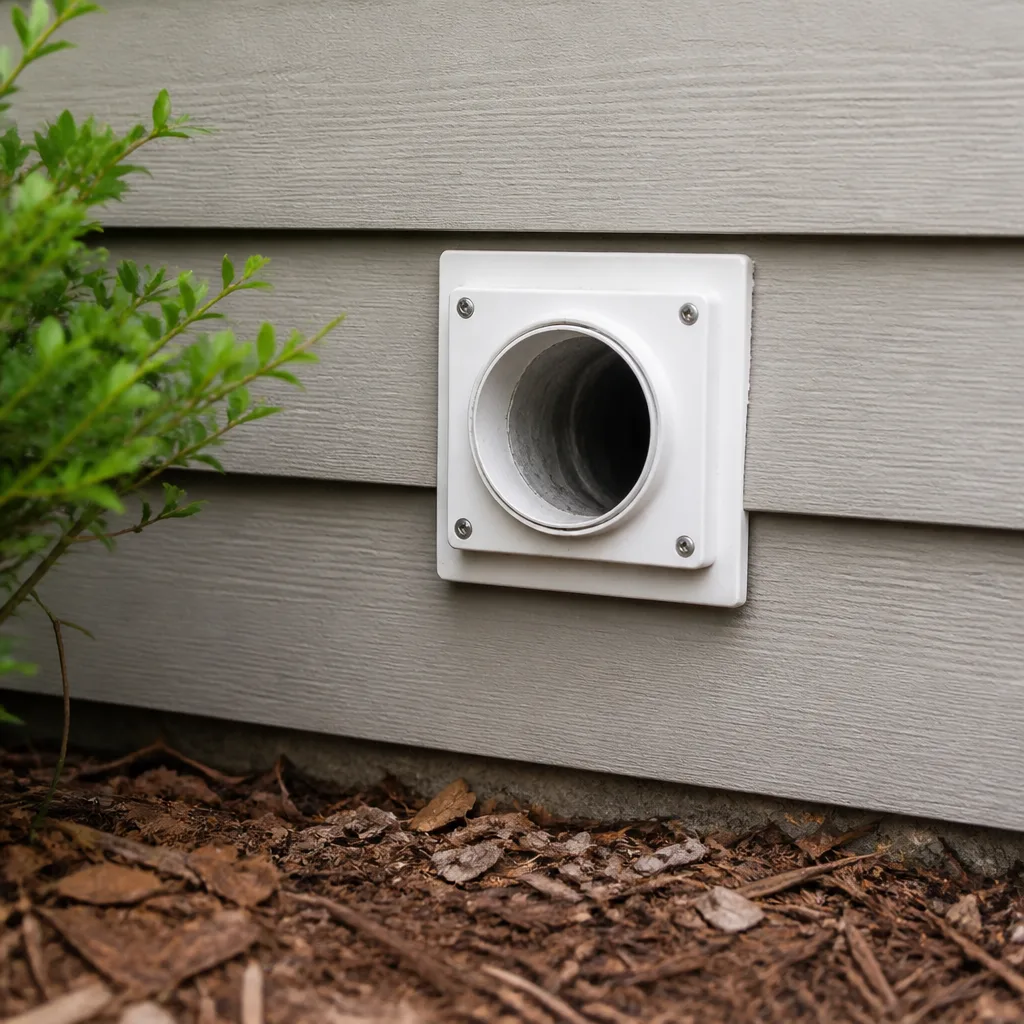 Dryer vent cleaning
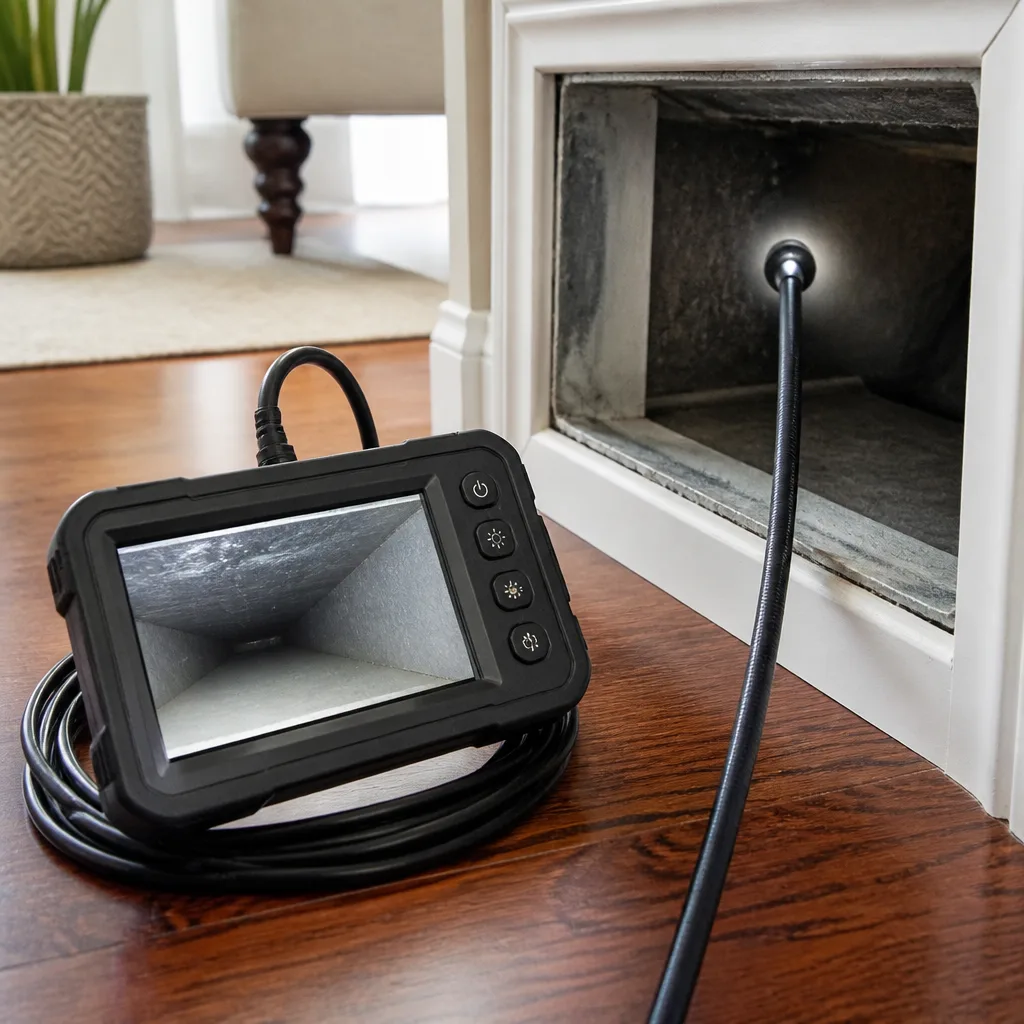 Camera inspection
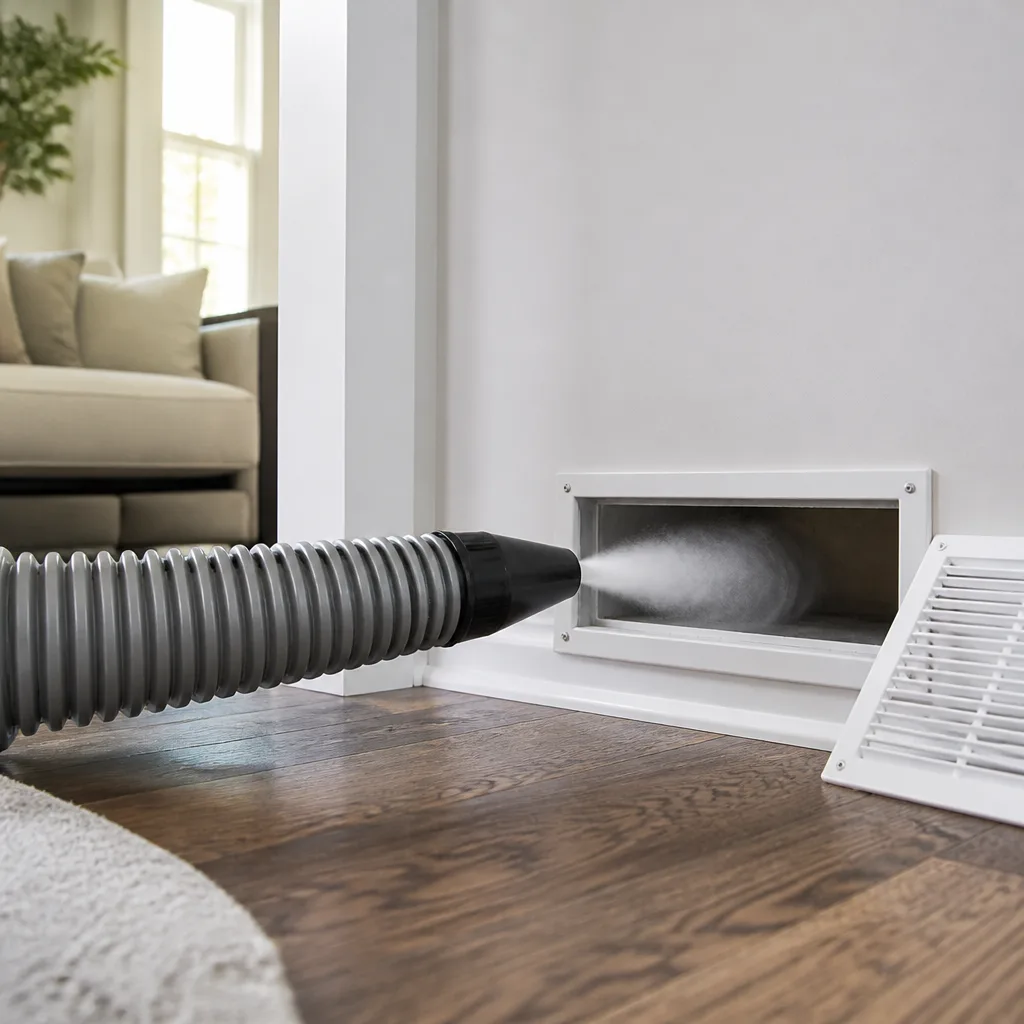 Sanitizing & deodorizing
Whole-system duct and dryer vent check with before-and-after photos - you see exactly what came out of your vents
That "$99 whole-house special" is a bait ad - the real number appears once they are in your hallway, or the "clean" is a shop-vac at the register. We photograph the inside of your ducts before and after instead.
The Complete Guide to Air Duct Cleaning in Port St. Lucie
Most air duct cleaning advice you’ll find online was written for a house that gets a real winter. Port St. Lucie doesn’t. Here, the AC runs through most of the year, humidity sits high for months, and the duct system in a typical slab-on-grade home is working harder and wetter than a guide written for Ohio or Colorado will ever account for. That changes when you should clean, what grows inside the ducts, and what a fair price looks like. This guide covers all of it for Port St. Lucie homeowners and property managers: the subtropical biology of a dirty duct, what professional containment equipment actually does, how to read a post-cleaning report, and how to tell a real duct specialist from a coupon crew with a shop vac.
Quick Answer
Air duct cleaning in Port St. Lucie is worth doing when you can see or smell the problem – visible dust on supply registers, a musty odor when the AC kicks on, recent renovation dust, or a system that hasn’t been opened in many years. A legitimate job uses brush-contact cleaning plus HEPA vacuum capture under negative pressure, and it ends with photo documentation of the inside of your ducts. Whole-system pricing in this market typically runs from about $350 to $900 depending on system size, accessibility, and whether repairs are needed, and the written estimate sets the final number.
Styles & brands we work with
- Whole-home duct cleaning
- Dryer vent cleaning
- Camera inspection
- Sanitizing & deodorizing
Table of Contents
- Why Port St. Lucie Ducts Get Dirty Differently
- What Actually Grows Inside a Florida Duct System
- What Professional Duct Cleaning Equipment Actually Does
- Source Removal vs. Contact Vacuum Cleaning
- Slab-On-Grade Construction and Duct Leakage
- What a Legitimate Post-Cleaning Inspection Documents
- How Much Does Air Duct Cleaning Cost in Port St. Lucie?
- Dryer Vents: The Other Duct in Your Home
Why Port St. Lucie Ducts Get Dirty Differently
The single biggest factor is runtime. In much of the country a home’s air handler idles for four or five months a year. In Port St. Lucie it doesn’t. Cooling season stretches across most of the calendar, and a system that runs 10 to 11 months a year moves an enormous volume of air through the same ductwork. More air means more dust captured on duct walls, more filter loading, and faster accumulation than a national average would suggest.
Then there’s the humidity. St. Lucie County sits in a subtropical climate where relative humidity stays elevated for long stretches, and an air-conditioned home is essentially a dehumidifier running continuously. That’s good for comfort and bad for duct interiors, because condensation can form on cold duct surfaces and in poorly insulated runs. Where there’s persistent moisture and a food source – dust, skin cells, pet dander – you get biological growth. That’s the mechanism behind the musty smell a lot of homeowners here notice when the system first comes on.
And then the sandy soil. Port St. Lucie is built on sandy ground, and construction, landscaping, and everyday foot traffic track fine grit indoors. A surprising amount of what ends up on duct walls here is mineral dust, not just lint. It’s heavier, it settles into the low points of horizontal runs, and it doesn’t blow out on its own.
Put those three together – runtime, humidity, grit – and the practical takeaway is simple. A Port St. Lucie duct system accumulates contamination faster than the generic “every three to five years” advice you’ll read elsewhere. If your home has pets, runs on a cheap fiberglass filter, or has had recent renovation work, that timeline compresses further. For the service side, see our page on air duct cleaning.
What Actually Grows Inside a Florida Duct System
The word homeowners hear is “mold,” but the more useful concept is biofilm. A biofilm is a thin, sticky layer of microorganisms and their secretions that forms on a wet surface. In ductwork, it develops where condensation collects: on the interior of flex duct in humid attics, near the evaporator coil, and at joints where insulation is compromised. Once it forms, it acts like flypaper for dust.
Flex duct dominates residential construction in this part of Florida, and flex has a characteristic weakness. Its inner liner is a plastic film over a wire helix, and the corrugations that make it flexible also create thousands of little ledges where dust settles. It also tears and sags more easily than rigid metal. A sagging run with a low spot is a condensation trap.
What to watch for:
- A musty or earthy smell that appears within a minute or two of the AC starting and fades as the system runs. That timing pattern points at the duct interior or the coil, not the room.
- Dark speckling or staining visible on a register boot or around a supply grille when you remove it.
- Visible dust plumes at a supply register in the first minute after startup.
- Allergy-like irritation that’s worse indoors than outdoors and follows the AC schedule.
- Condensation on duct surfaces in the attic – a sign the vapor barrier or insulation has failed.
A professional cleaning removes the film and the food source it holds. It doesn’t sterilize the system, and any company promising a “sanitized” home by fogging chemicals into the ducts deserves scrutiny: the fix is removing the material, not masking it. We treat moisture problems as a repair issue – re-sealing, re-insulating, correcting a sagging run – because cleaning a duct that will just get wet again is a short-term fix. Our technicians have up to 15 years of experience with exactly this pattern in Florida homes.
What Professional Duct Cleaning Equipment Actually Does
Here’s the difference that matters most, and it’s not the truck or the price. It’s whether the machine can physically dislodge debris from the duct wall and capture it at the same time. A shop vac cannot. Neither can a leaf-blower-style “air sweep” that some budget operators run through the system.
Proper cleaning uses two categories of equipment working together:
- Agitation tools. Rotobrush systems run a rotating brush head through the duct, making direct contact with the interior surface. This is what actually breaks the bond between biofilm, caked dust, and the duct wall. Air alone skims the surface; a brush contacts it.
- Capture under negative pressure. While the brush is agitating, a HEPA vacuum pulls the loosened material out. Nikro HEPA vacuum rigs are the professional-grade standard for this, and Abatement Technologies negative-air equipment holds the whole work area under containment so dislodged contaminants don’t recirculate into living space.
That second point is the one most homeowners never think about. Without containment, you’re agitating dust inside the house and letting the HVAC system redistribute it – the exact opposite of the goal. Negative pressure means the air in the work zone is always moving toward the vacuum, never toward your kitchen.
We clean with Rotobrush brush systems and Nikro HEPA vacuums, and we run Abatement Technologies containment during the job. Those aren’t marketing names; they determine how much of the contamination actually leaves the house. When you compare quotes, ask what agitation tool and what vacuum the company uses. If the answer is vague, that tells you something.
Source Removal vs. Contact Vacuum Cleaning
The industry distinction that matters is between source removal and contact vacuum cleaning. Source removal means the accumulated material is physically removed from the system and taken away – ducts opened at key access points, brushed, captured, and left genuinely cleaner than they were found. Contact vacuum cleaning means a vacuum head is run across accessible surfaces, typically the trunk and the register boots, without full agitation of the branch runs.
Both have their place. Contact vacuum cleaning is a light-touch option and it has some value in a system that’s already fairly clean. But if you’re paying for duct cleaning because you have a visible or smellable problem, contact vacuum alone won’t fix it – the contamination lives inside the branch runs, not on the surfaces a vacuum head can reach.
For older Port St. Lucie homes, this distinction is sharper. Homes built before flex duct dominated construction often have rigid metal trunk-and-branch systems, sometimes with interior duct board that has degraded with age. Old duct board can shed fiberglass fibers if it’s agitated carelessly, which means the approach has to be adjusted: gentler agitation, more reliance on vacuum capture, and a technician who knows to check the duct board’s condition before running a brush through it. This is one reason a duct specialist beats a generalist every time on older properties.
Slab-On-Grade Construction and Duct Leakage
Most Port St. Lucie homes are slab-on-grade, which means the ductwork runs through the attic and wall chases, not a basement. That’s the norm here and it has a specific consequence: a leaky duct in an attic doesn’t pull in nice clean basement air. It pulls in unconditioned attic air, attic insulation particles, and outside humidity.
The geography of Port St. Lucie matters here too. The city spreads across distinct neighborhoods – from the older sections near the river to the newer developments out along the western corridors – and construction eras vary widely between them. Older homes often have duct systems that have been patched, extended, or reconnected over the years. Each joint is a potential leak, and a leak in a duct run over an unconditioned attic is bleeding your cooling dollars into the heat.
What to look for:
- Duct runs that look crushed, kinked, or disconnected at a boot or plenum.
- Visible gaps at joints where tape or mastic has dried and let go.
- Rooms that never cool as well as the rest of the house, often the room at the end of the longest run.
- Higher-than-expected electric bills with no other explanation.
- Attic insulation visibly disturbed or dust-stained around a duct.
This is where a specialist that repairs earns its place. We don’t just clean and leave with a report of the problem. Sealing and reconnecting a failed duct joint, replacing a crushed flex run, and re-supporting a sagging span are all part of what we do. If you’re looking at this for a specific property, our Port St. Lucie page covers the neighborhoods and construction patterns we see most.
What a Legitimate Post-Cleaning Inspection Documents
This is the part that separates a real job from a marketing story. You paid for the ducts to be cleaned. How do you know they were? The answer is documentation, and a legitimate job ends with evidence, not a verbal “all done.”
A proper post-cleaning inspection should include:
- Before-and-after photos of your actual ducts. Not stock images of a clean duct, not a generic “typical result” graphic. Photos of your supply and return interiors, your register boots, and any section that was visibly contaminated before.
- Access point identification. A written note of where access was cut or existing access panels were used, so future technicians and inspectors can find them.
- A written summary of what was found. Contamination level, moisture indications, and any damage a repair should address.
- Any repair recommendations, photographed. A disconnected joint or crushed run should be shown to you, not just described.
Why does this matter beyond peace of mind? Because documentation has practical uses. If a resale inspection raises a question about the duct system, a dated photo set showing a clean, intact system is evidence. If you’re filing a homeowner’s insurance claim after a water event, a dated record of duct condition helps establish a baseline. Property managers we work with keep the photos on file per unit for exactly this reason.
How Much Does Air Duct Cleaning Cost in Port St. Lucie?
Air duct cleaning in Port St. Lucie typically costs between about $350 and $900 for a whole-house system, depending on the number of supply and return runs, how accessible the trunk and branches are, how heavily contaminated the system is, and whether repairs are needed. That range is an estimate; the written estimate you receive on site sets the final price, and we quote one flat price per system before any work begins.
Here’s how the variables break down:
| Factor | Typical range (estimated) | What drives it |
|---|---|---|
| Standard single-story system, clean to moderate | $350 – $550 | Common run count, accessible attic layout |
| Larger or two-story system | $550 – $900 | More runs, harder access, second trunk line |
| Heavy contamination / post-renovation | Toward the upper end | Extra passes, more containment setup |
| Duct repair (connection, sagging run, replacement) | Quoted separately per issue | Materials and access, priced after inspection |
| Dryer vent cleaning | Quoted per vent run | Run length, roof vs. wall termination |
Two things we won’t do: quote a per-vent price, or tease you in with a low coupon number that balloons once the technician is in the attic. If you’ve ever been on the wrong end of that, you know the exact feeling. One flat price per system, agreed before work starts, is the only structure that keeps the incentive honest.
Why are some quotes so much cheaper? Usually because the scope is smaller. A $99 coupon typically buys a surface vacuum of the trunk and a look at the registers, not brush-contact cleaning of every branch run under HEPA capture. If your system is genuinely dirty, the cheap quote leaves the dirt exactly where it was. Call (866) 502-9547 for an exact quote – estimates are free.
Dryer Vents: The Other Duct in Your Home
Air ducts are about air quality. Dryer vents are about fire safety, and the difference is worth spelling out. Lint is one of the most flammable materials in a home, and a dryer vent that’s partially blocked with it is a fire risk that builds quietly behind the appliance. It also makes the dryer run longer and hotter, which shortens the appliance’s life.
Most homeowners have never looked inside their dryer vent. Here’s what to check:
- Drying time. A load that used to take 45 minutes and now takes 70 is a warning sign.
- Heat at the dryer door. Noticeably hotter than it used to be suggests restricted airflow.
- The exterior termination. Check that the flap opens freely and that there’s no lint visible around the outlet.
- Run length and routing. A long vent run with multiple elbows traps more lint than a short direct one.
- Flexible foil or plastic vent hose. The thin corrugated kind collects lint at the ridges; rigid metal is safer.
We treat dryer vent cleaning as a fire-safety service, not a maintenance chore. It’s a natural thing to combine with a duct cleaning visit, since both are duct work and both benefit from the same professional vacuum equipment, but either can be booked on its own. If you’re not sure when your vent was last cleaned, that’s usually reason enough to have it looked at.
Common Mistakes to Avoid
- Hiring on price alone. The cheapest quote is almost always the smallest scope – a surface vacuum, not source removal. The money you save comes out of the machine time and the capture equipment. Ask what agitation tool and vacuum the company uses before you commit.
- Believing a “sanitizing fog” will fix a musty smell. Masking odor with a chemical fog leaves the biofilm and its food source in place, and the smell returns. The fix is removing the material and correcting the moisture that fed it.
- Skipping the before-and-after photos. If the company can’t show you your own ducts before and after, you have no way to verify the work. This is a red flag in any market, and it’s the single most common complaint we hear from Port St. Lucie homeowners.
- Ignoring duct leakage in a slab-on-grade home. Attic duct leaks pull in hot, humid outside air and drive up cooling costs. Cleaning without sealing a failed joint means the system just loads up again faster.
- Waiting for a visible problem in a humid climate. Because Port St. Lucie runs its AC nearly year-round, duct contamination can be substantial before it’s visible at a register. If it’s been many years and the system has never been opened, a professional look is warranted.
- Using a cheap fiberglass filter as a substitute for cleaning. A thin filter catches a fraction of what a pleated or higher-rated filter does, and none of them address contamination already on the duct walls. Filter upgrades help – they don’t clean.
- Letting a generalist “add on” duct cleaning. A duct specialist who cleans, repairs, and documents the system is a different service than an HVAC tune-up with a vacuum attachment. The scope and equipment are not the same.
See the difference
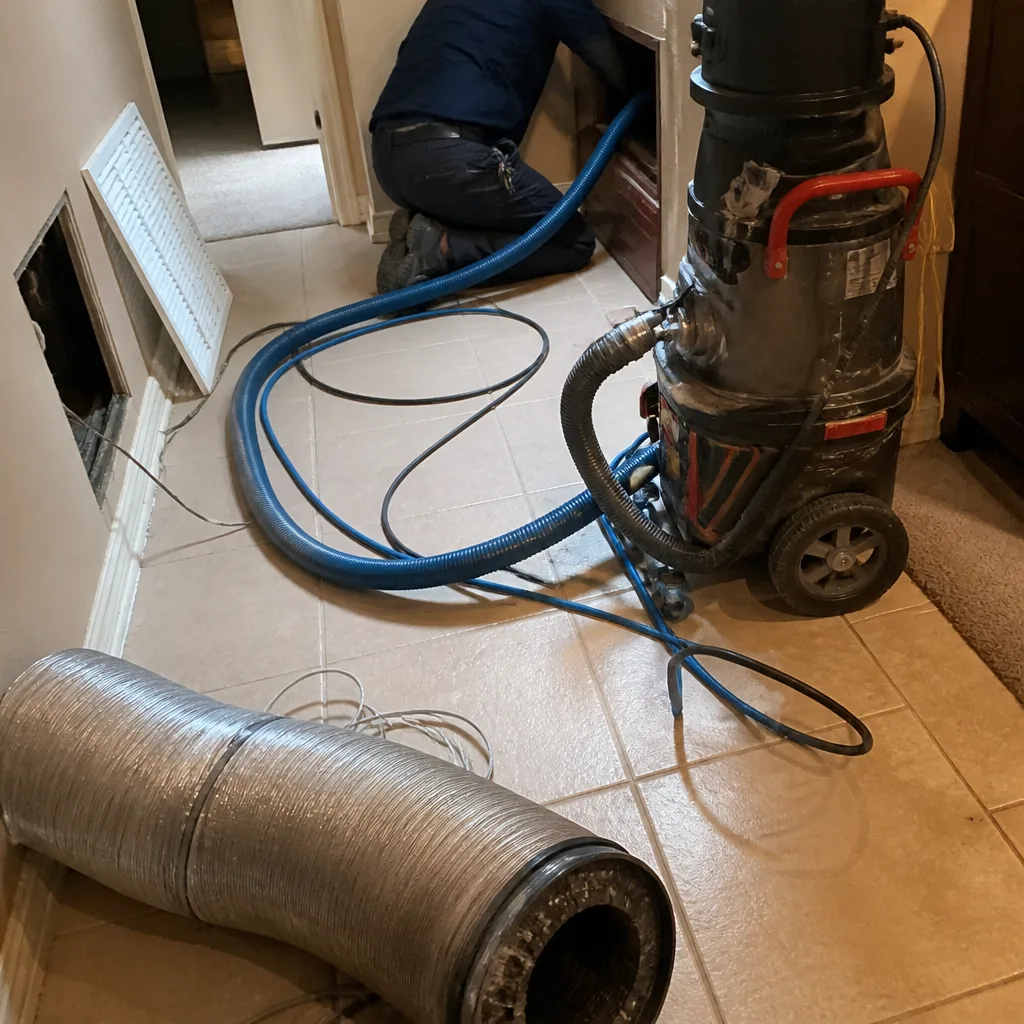 Before
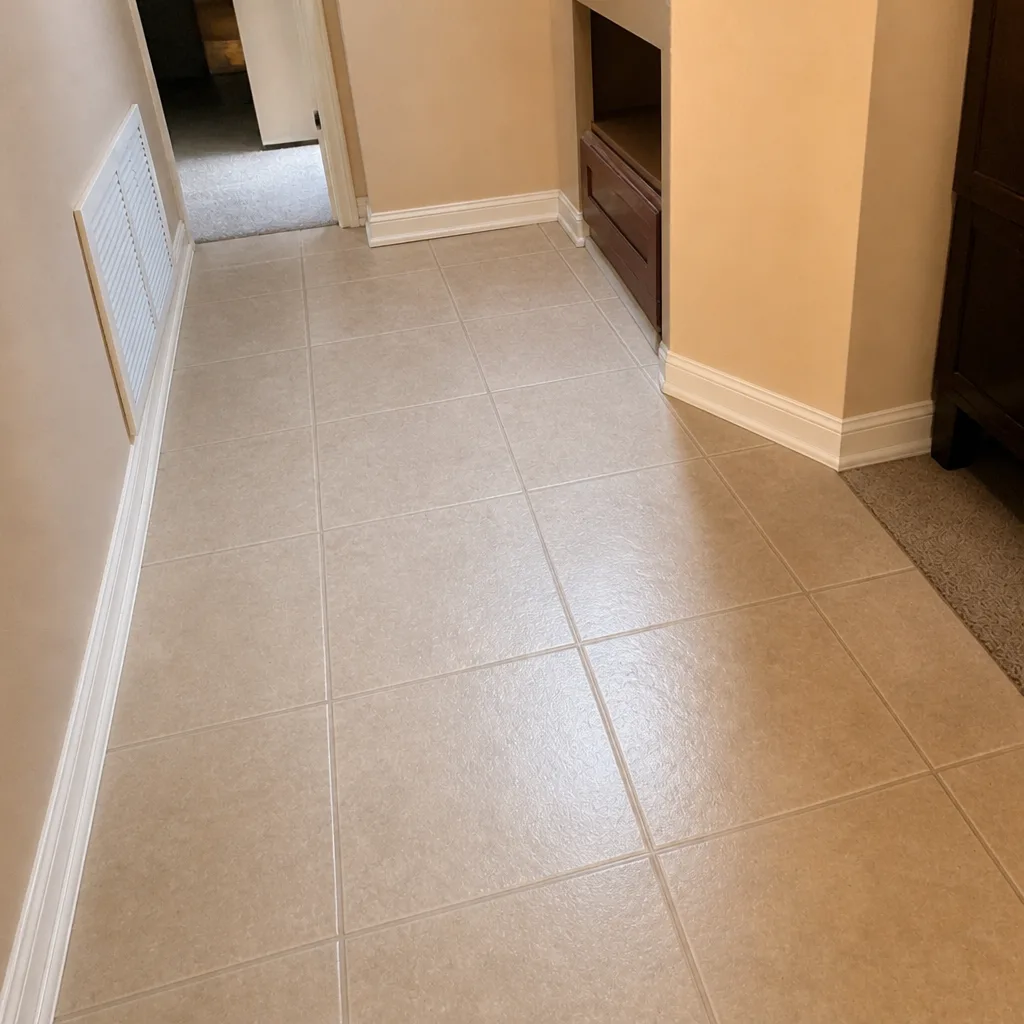 After
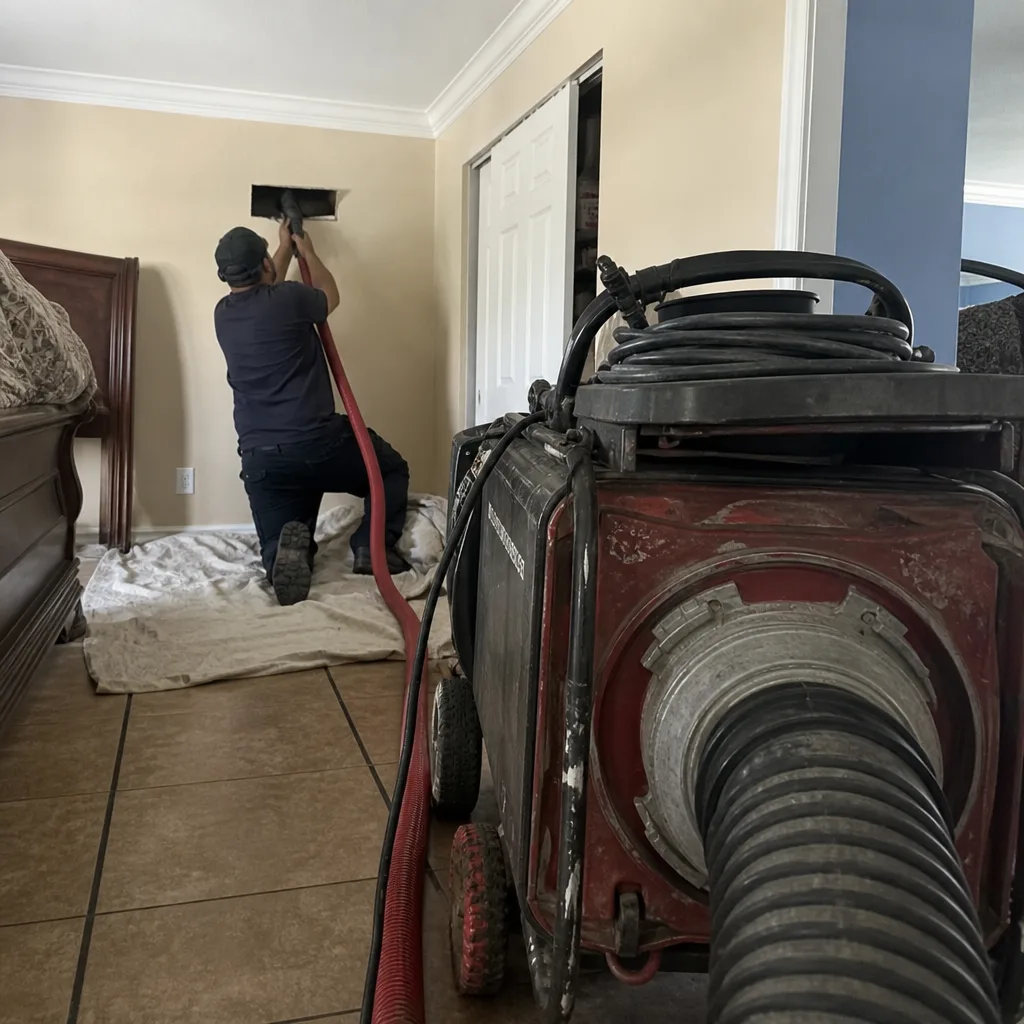 Before
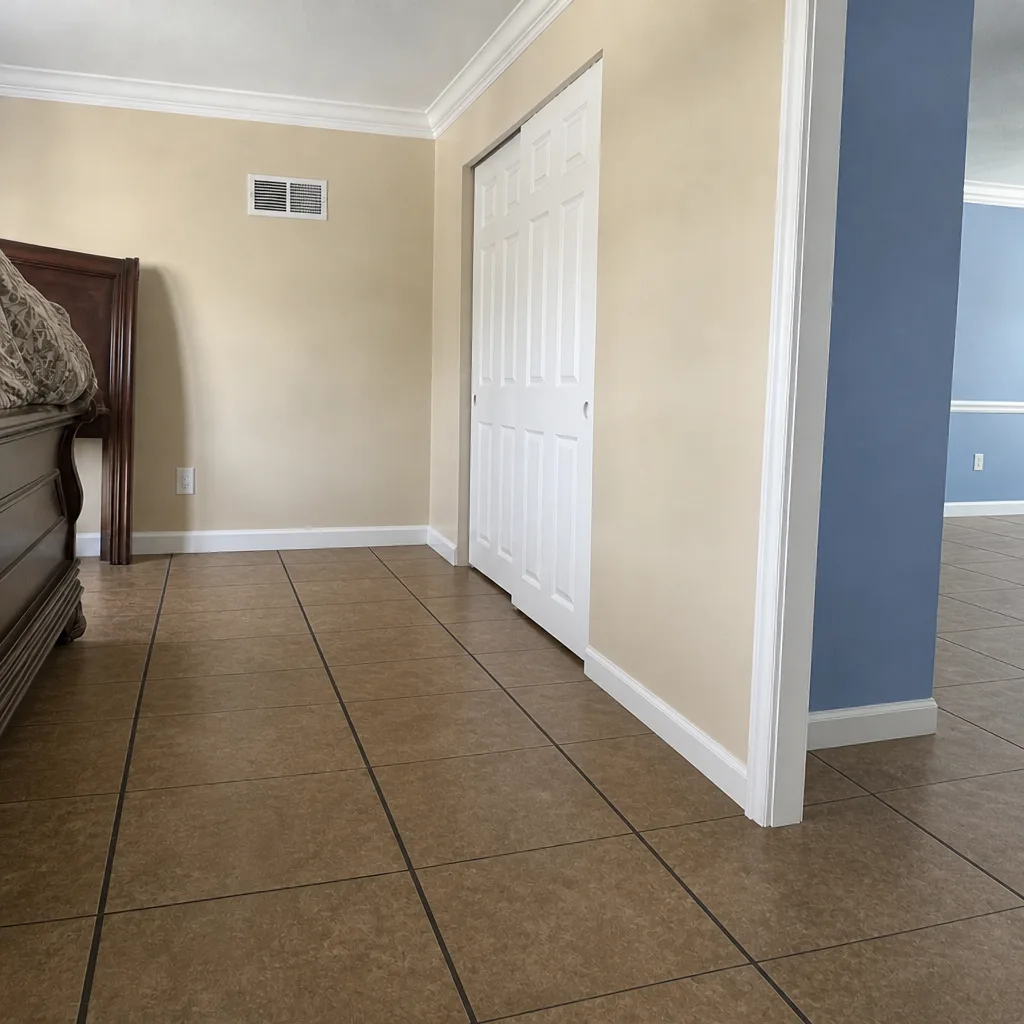 After
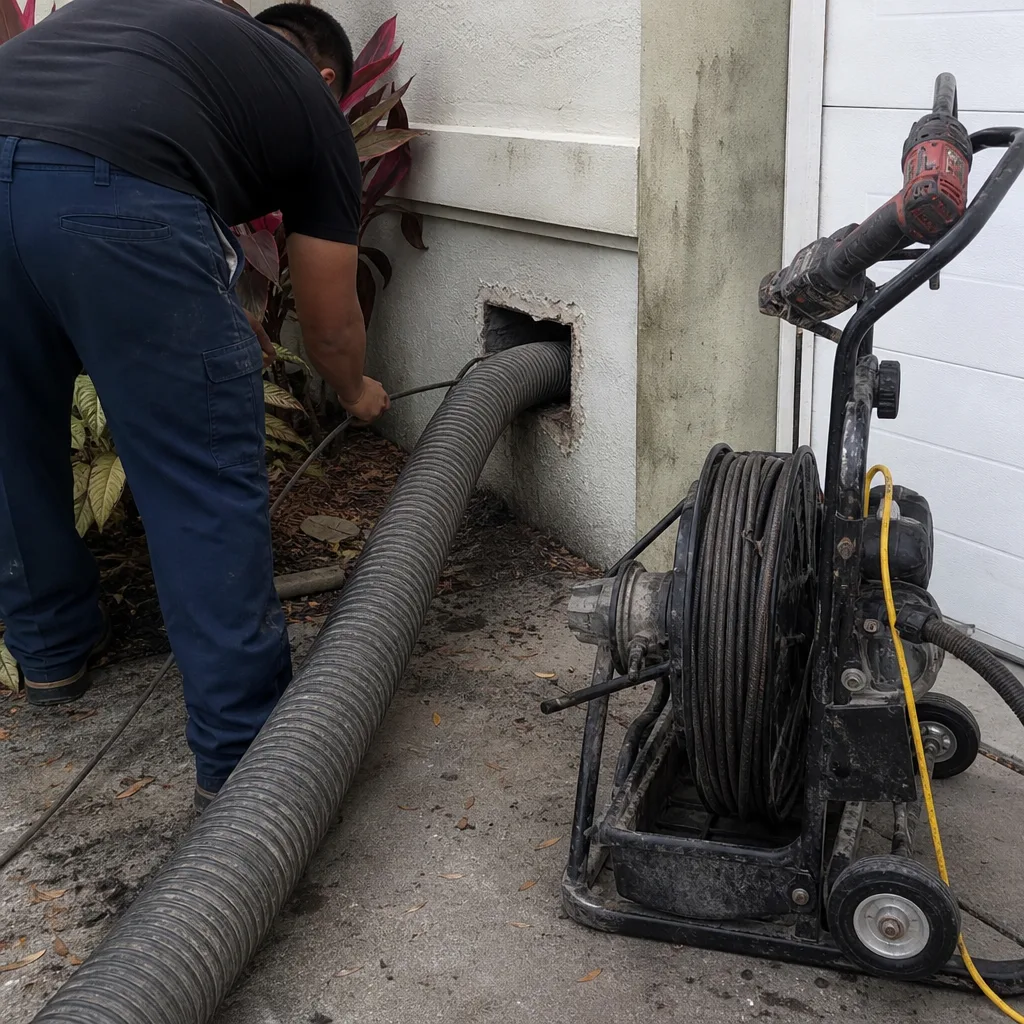 Before
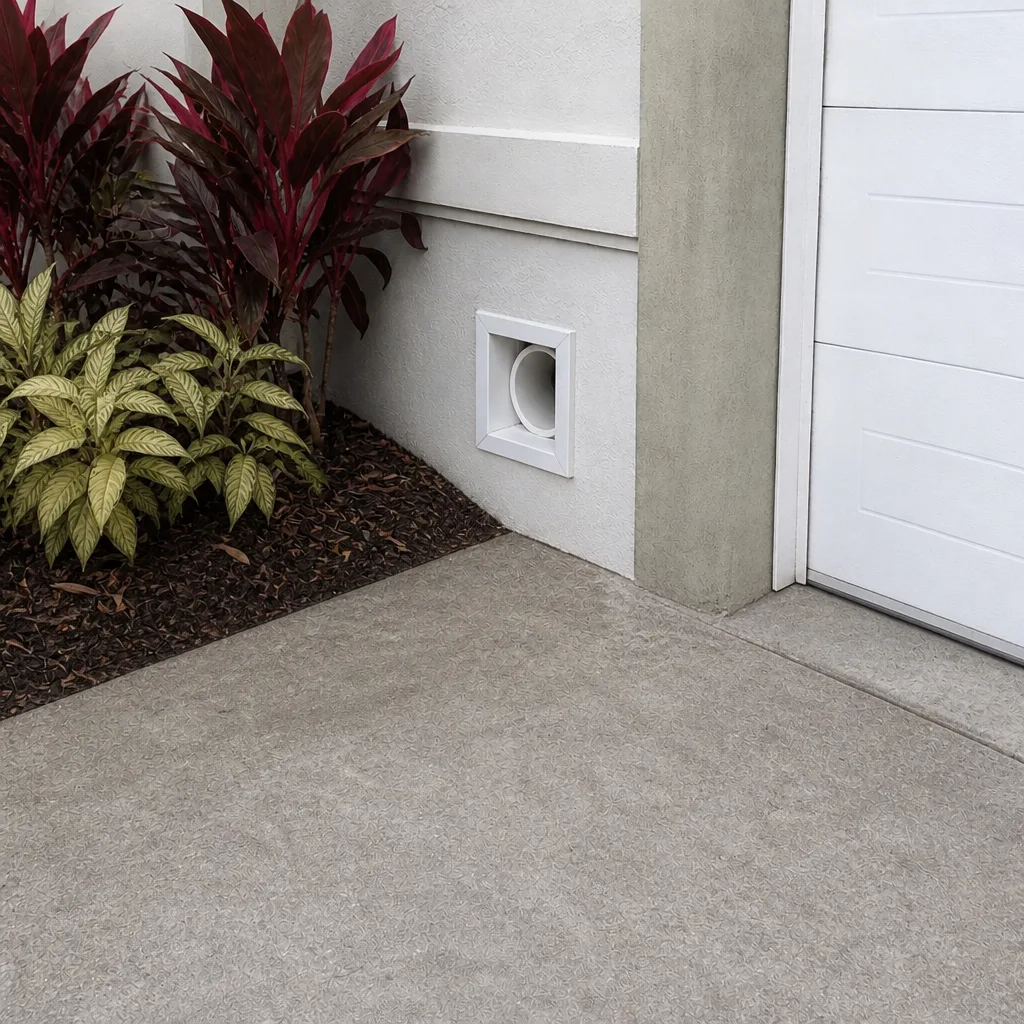 After
When to Call a Professional
Call a professional when you can see dust plumes at a supply register after the AC starts, when there’s a musty smell tied to the cooling cycle, when the system has never been cleaned and the home has pets or recent renovation dust, or when you suspect a disconnected or crushed duct in the attic. Call sooner if you’re buying or selling a home and need documentation, or if you manage rental property and need a unit’s duct condition on record. Our technicians have up to 15 years of experience, and we clean, repair, and document in one visit – if we find a failed joint or a sagging run, we fix it rather than hand you a list. Hometown Air Duct Cleaning offers free estimates in Port St. Lucie – call (866) 502-9547. We answer 24/7. Fast dispatch from 7am to 7pm, Sunday through Friday.
Frequently Asked Questions
Air duct cleaning in Port St. Lucie typically costs between about $350 and $900 for a whole-house system, with larger or heavily contaminated systems at the higher end and repairs quoted separately. Those are estimated ranges; the written estimate sets the final price, and we quote one flat price per system before work begins. Call (866) 502-9547 for an exact quote – estimates are free.
In Port St. Lucie, most homes benefit from a professional assessment every three to five years, with homes that have pets, heavy occupancy, or recent renovations on the shorter end of that window. The reason the interval is tighter here than in the national advice is runtime: a system that runs most of the year moves far more air through the same ducts. A free estimate will tell you where your specific system stands.
Cheap quotes usually buy a smaller scope: a surface vacuum of the trunk and a look at the registers, without brush-contact cleaning of every branch run and without HEPA capture under negative pressure. That leaves the contamination that caused your problem exactly where it was. We quote a flat per-system price for the full job. Call (866) 502-9547 to compare on scope rather than sticker price – estimates are free.
Ask for before-and-after photos of your own ducts, taken during the job, plus a written summary of what was found and any repairs needed. A legitimate company will hand these over without being asked twice. We document every job this way, and it doubles as useful evidence for resale or insurance. Call (866) 502-9547 to book an estimate.
We clean and we repair – reconnecting failed joints, replacing crushed or torn flex runs, re-supporting sagging spans, and correcting the moisture problems that feed biofilm growth. That’s a difference from most standalone duct-cleaning operations, which document damage but can’t fix it. If a repair is needed, it’s quoted separately before any work starts.
Yes. Dryer vent cleaning can be booked alongside air duct cleaning or on its own, and we use the same professional vacuum equipment for both. It’s worth doing as a fire-safety measure, especially if drying times have crept up or the vent run is long. Call (866) 502-9547 for a combined estimate – estimates are free.
The Bottom Line
Port St. Lucie ducts get dirty on a different schedule than the rest of the country, because a system that runs ten or eleven months a year moves more air, humidity feeds biofilm growth in flex duct, and sandy soil settles into the low points. The fix is source removal – brush-contact agitation with Rotobrush equipment, HEPA capture with Nikro and Abatement Technologies rigs, and negative pressure that keeps contaminants out of your living space. Then repair what’s found, and document it with photos of your own ducts. One flat price per system, agreed before work starts. Hometown Air Duct Cleaning handles all three services – duct cleaning, dryer vent cleaning, and duct repair – with Honeywell and Aprilaire filtration upgrades available on the same visit.
Call (866) 502-9547 for a free estimate. We answer 24/7. Fast dispatch from 7am to 7pm, Sunday through Friday.
Written by the team at Hometown Air Duct Cleaning.