
Last updated November 16, 2026
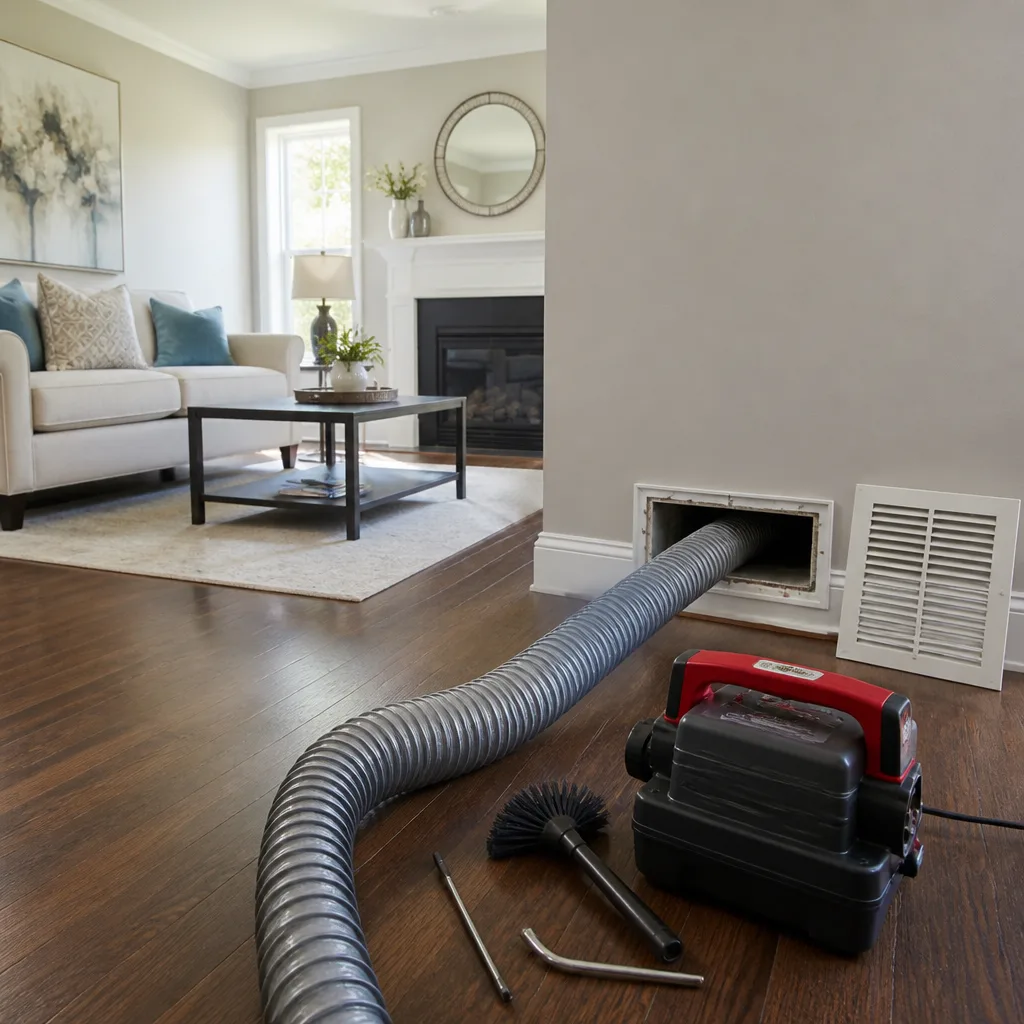 Whole-home duct cleaning
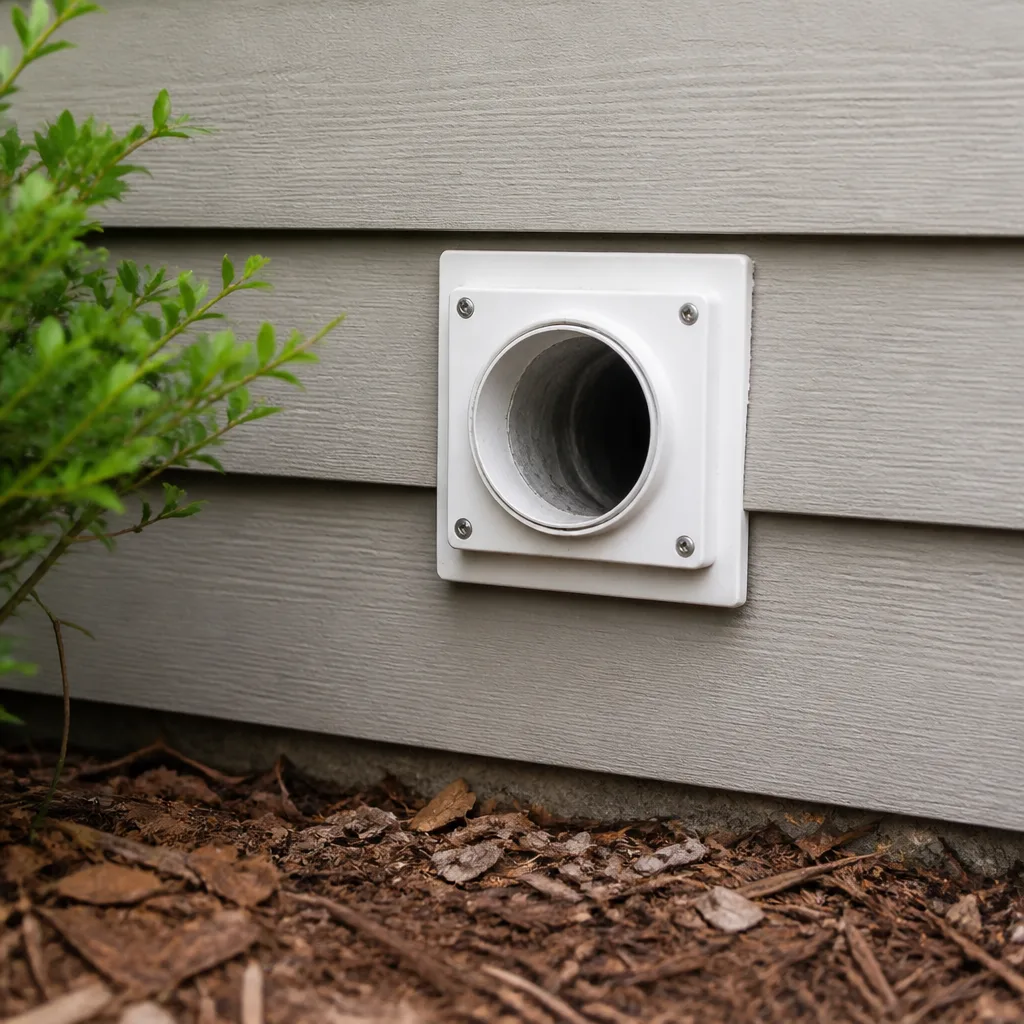 Dryer vent cleaning
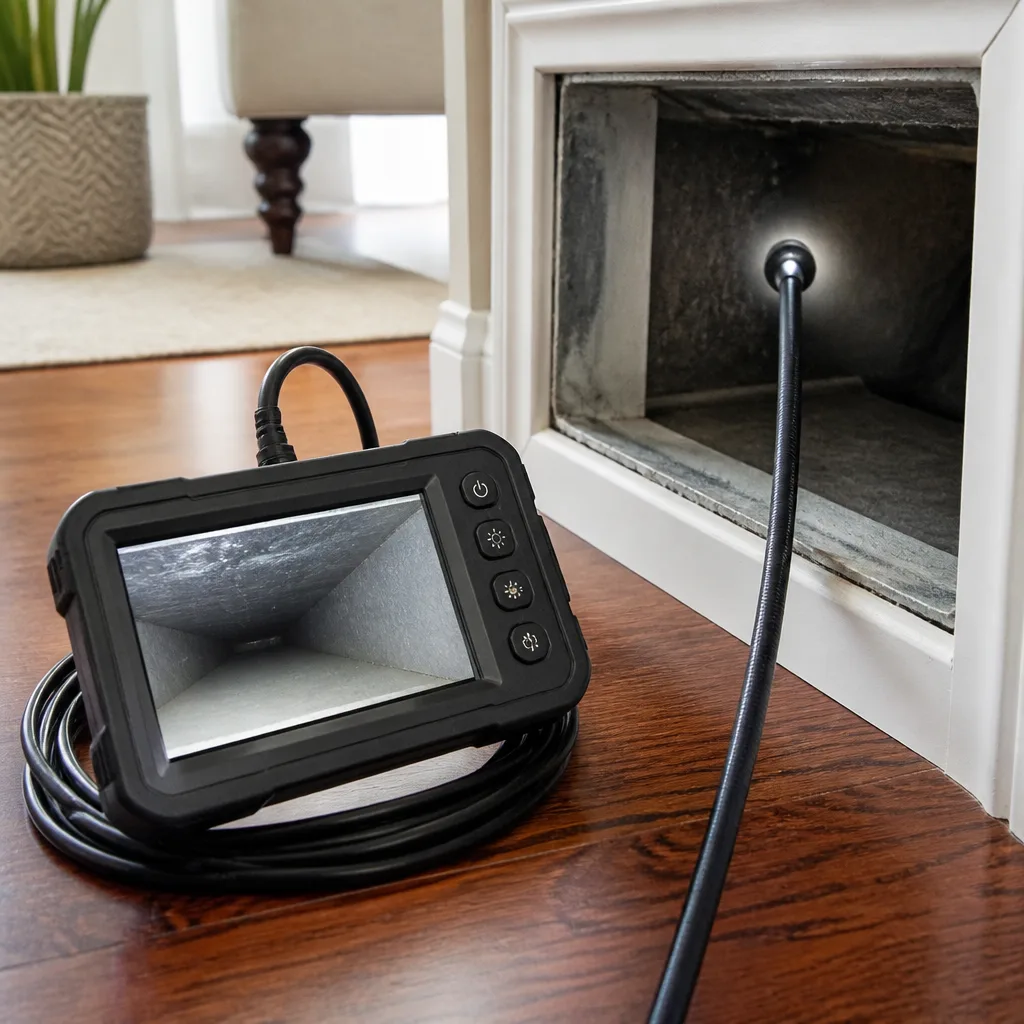 Camera inspection
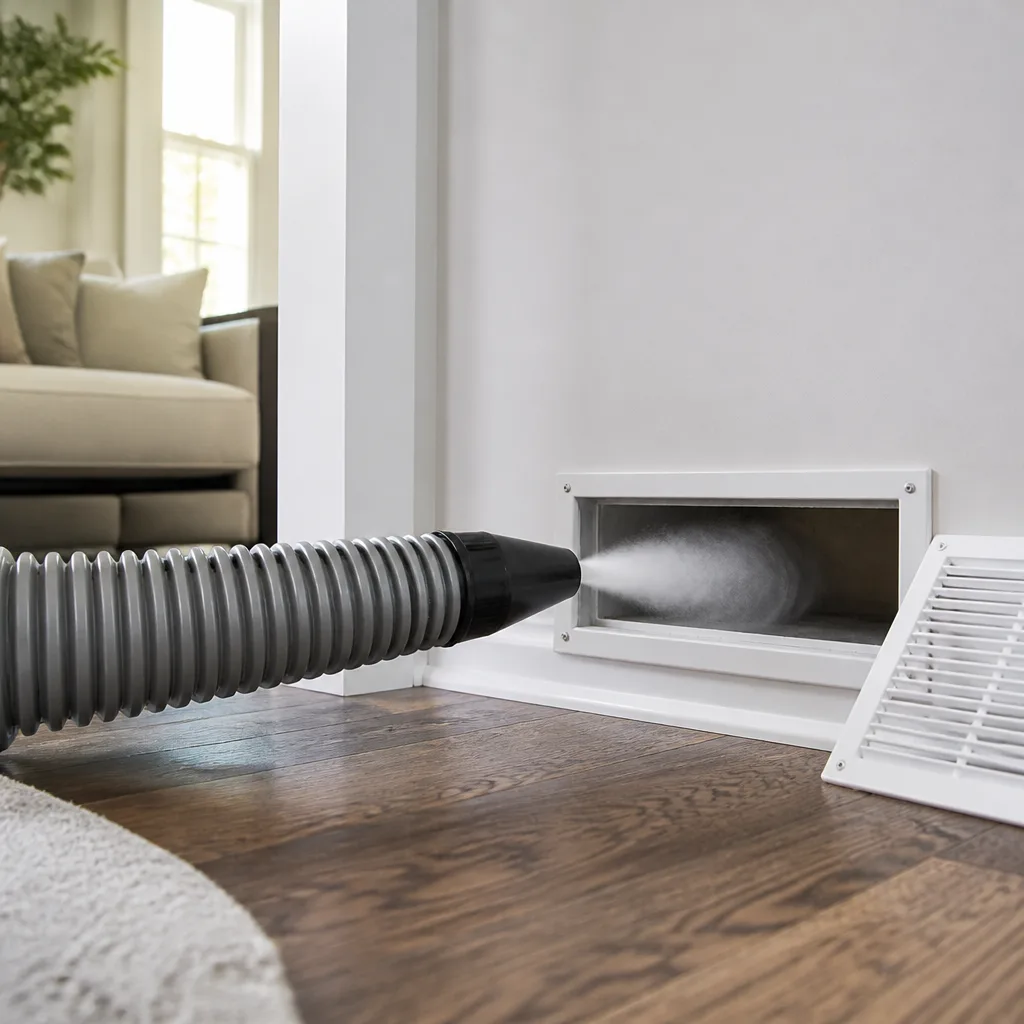 Sanitizing & deodorizing
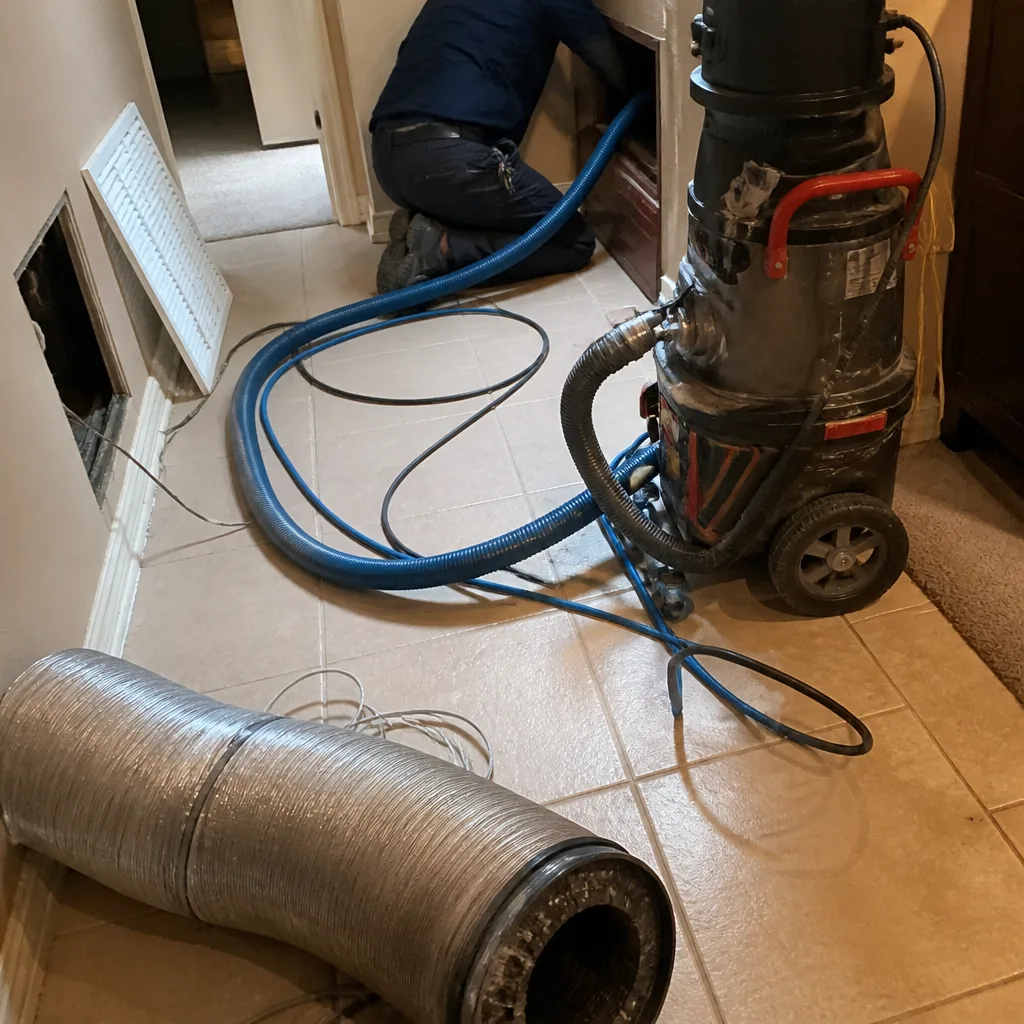
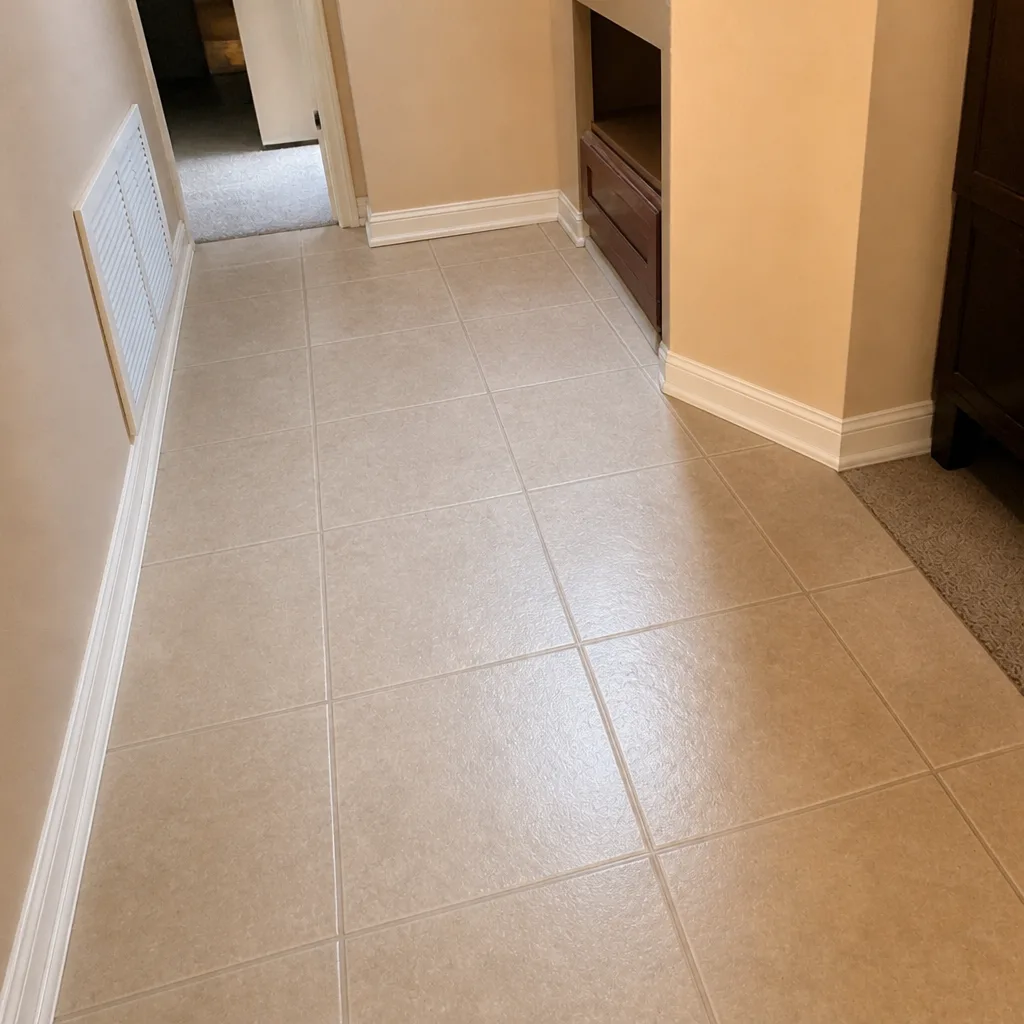
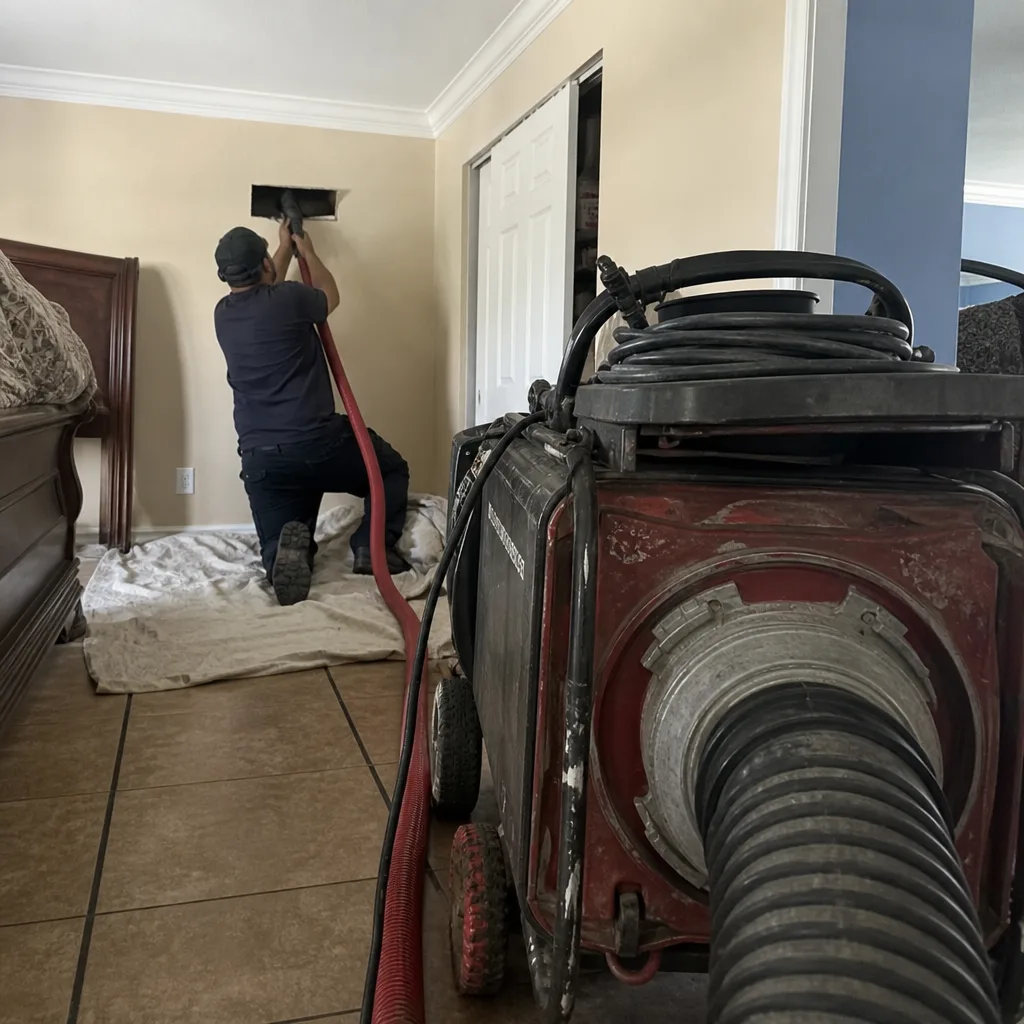
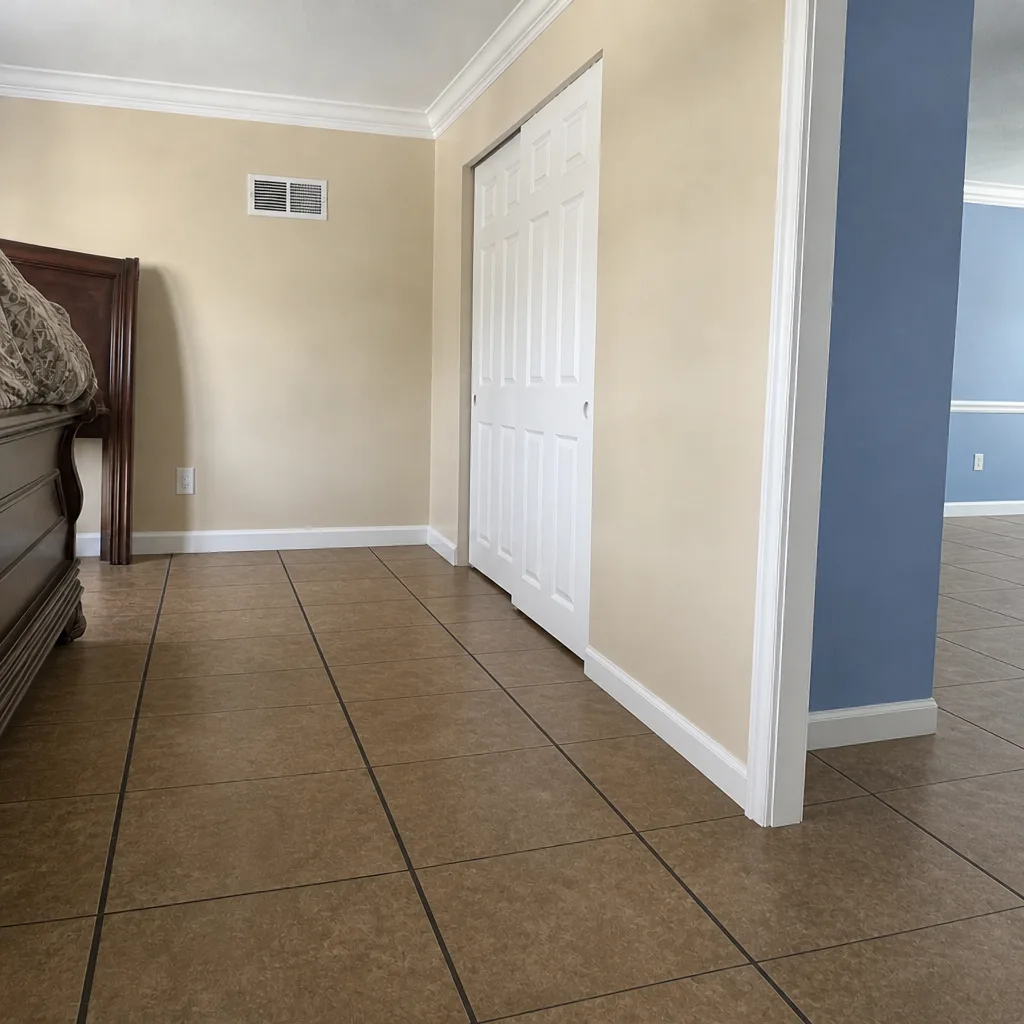
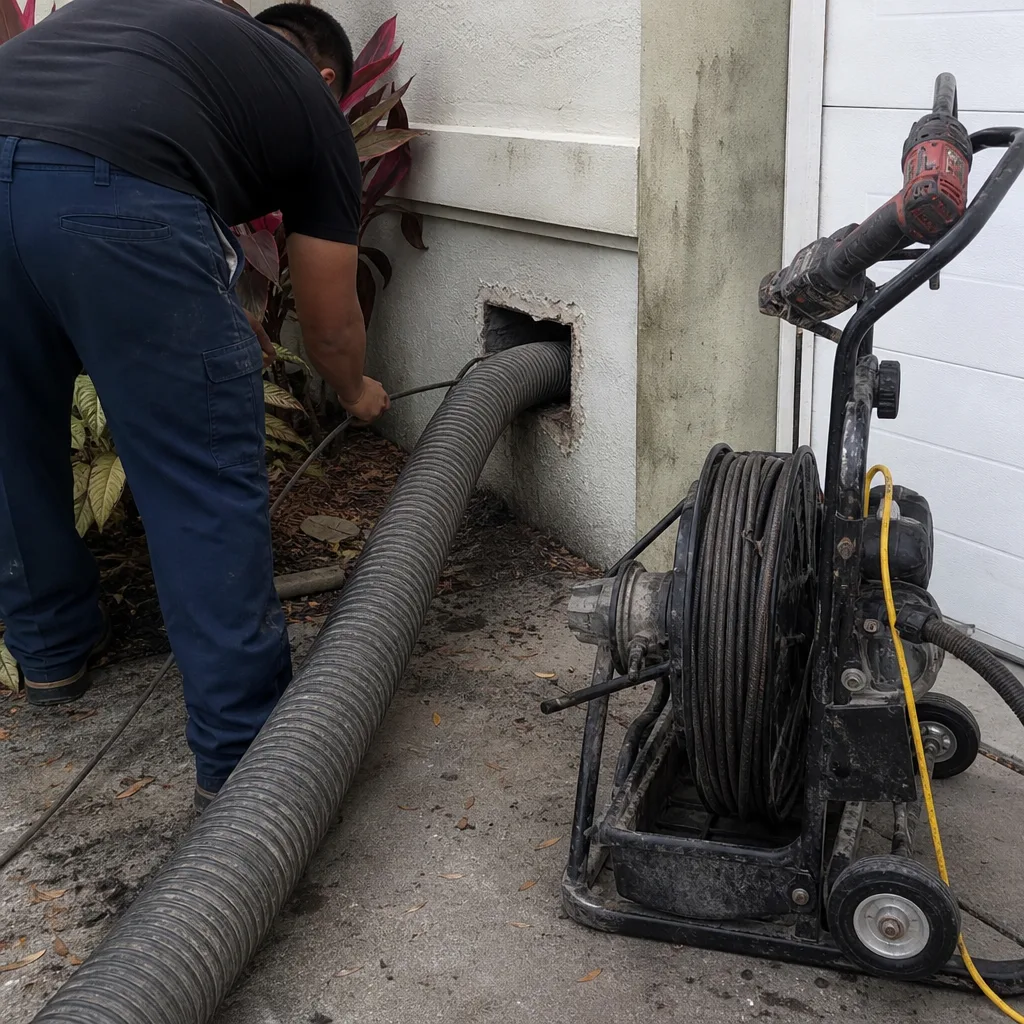
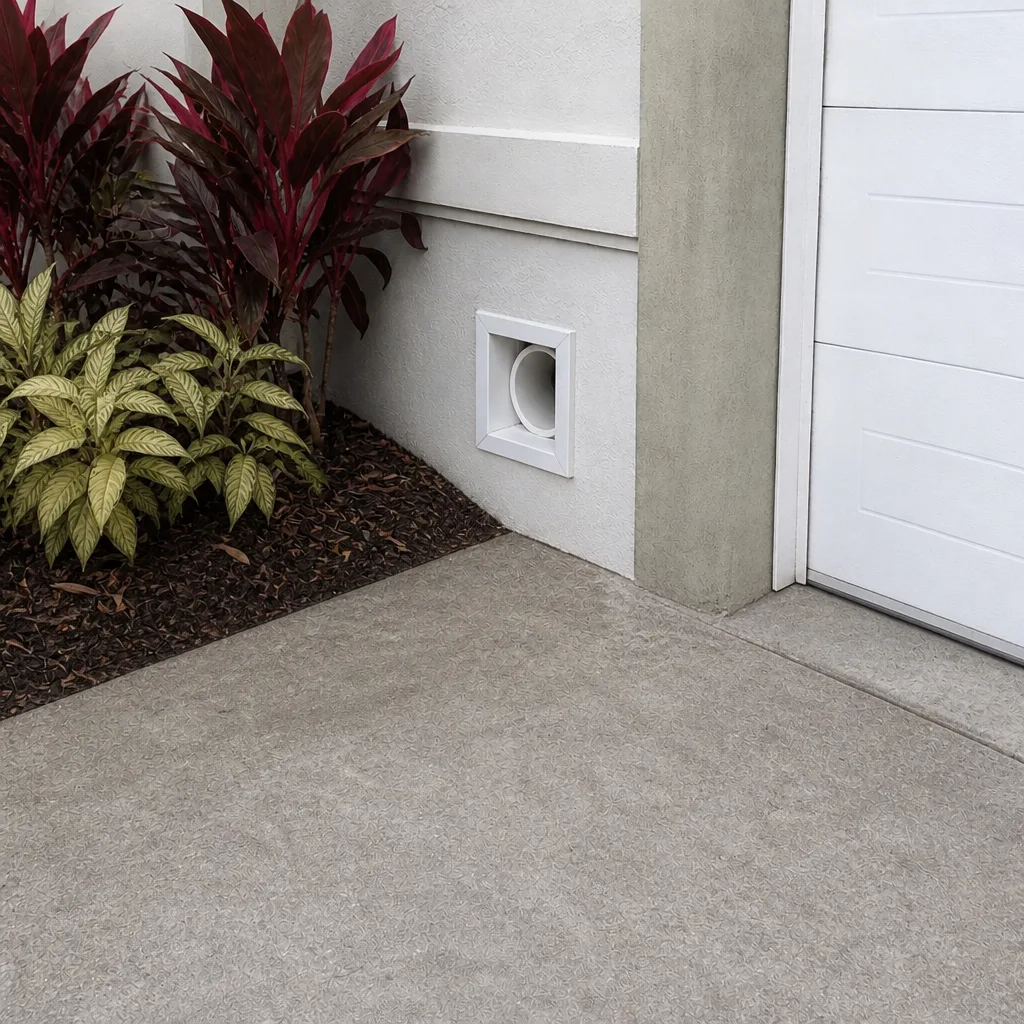
Whole-system duct and dryer vent check with before-and-after photos - you see exactly what came out of your vents
That "$99 whole-house special" is a bait ad - the real number appears once they are in your hallway, or the "clean" is a shop-vac at the register. We photograph the inside of your ducts before and after instead.
Air Duct Cleaning Warning Signs: A Port St. Lucie Homeowner’s Reference Guide
If your vents smell musty only when the AC kicks on, and the smell fades within a few minutes, that’s not “just the humidity.” It’s a textbook sign of biofilm sitting on the supply plenum or the evaporator coil, and it’s one of the most underreported duct problems in Florida homes because the symptom clears itself before most people think to write it down. Port St. Lucie homes run their air handlers harder and longer than most of the country, and the duct failures that follow look different from the ones in drier climates. This guide walks through the warning signs that actually matter here, how to tell a real problem from a harmless one, and where the line sits between a homeowner’s checklist and work that needs professional equipment.
Styles & brands we work with
- Whole-home duct cleaning
- Dryer vent cleaning
- Camera inspection
- Sanitizing & deodorizing
Quick Answer
The main warning signs you need air duct cleaning in Port St. Lucie are a musty odor that appears when the system starts and fades minutes later, visible dust returning to surfaces within days of cleaning, uneven room temperatures that trace to specific vents rather than the thermostat, dark staining around supply registers, and pest evidence inside flex duct. Any one of these is worth an inspection; two or more together usually means debris, leakage, or contamination that a filter change won’t fix.
Table of Contents
- The Startup Odor Pattern: Florida’s Most Misread Warning Sign
- Uneven Room Temperatures: A Duct Leakage Diagnostic
- Dust That Returns Within Days: Active Bypass Leakage
- Dark Staining Around Supply Registers: Mold vs. Filtration Staining
- Pest Evidence in Flex Duct Systems
- Seven More Signs Homeowners Overlook
- How to Tell If You Need Cleaning or Repair
- Common Mistakes to Avoid
- When to Call a Professional
- Frequently Asked Questions
- The Bottom Line
The Startup Odor Pattern: Florida’s Most Misread Warning Sign
Here’s the pattern: the AC cycles on, and within thirty seconds a faint musty or sour smell drifts from the registers. Two or three minutes later, it’s gone. It doesn’t come back until the next cycle. Homeowners in Port St. Lucie describe this constantly, and nearly all of them explain it away as humidity or “the house being closed up.”
It isn’t. That startup-only pattern points to contamination that’s sitting in the air path before the blower starts moving volume. The most common locations are:
- The supply plenum – the box of ductwork directly above the air handler, where condensation and dust collect and where airflow is slowest at startup.
- The evaporator coil and drain pan area – a wet surface that stays damp between cycles in a Florida summer.
- The first few feet of branch duct – where particulate settles closest to the source.
A thin film of biofilm on any of these surfaces produces odor only while the air is moving past it. Once airflow is fully established, the smell dilutes below the threshold of notice. That’s why it clears so fast, and why so many people never mention it to anyone.
The tell that separates this from ordinary mustiness is the timing. A smell that’s present all the time suggests something else entirely – a damp crawlspace, a leaking return chase, a plumbing issue. A smell that arrives with the blower and leaves with it is a duct-system smell. In our experience, this pattern is more common in slab-construction homes with flex duct running through unconditioned attic space, which describes a large share of the housing stock in Port St. Lucie. The attic gets hot, the duct jacket sweats where it’s poorly sealed, and the plenum never fully dries out.
What to check without opening anything: note exactly when the odor appears relative to the thermostat calling for cool, and whether it’s stronger at vents closest to the air handler. Write it down for a few days. That note is more useful to a technician than any description you can give over the phone.
Uneven Room Temperatures: A Duct Leakage Diagnostic
One bedroom runs three degrees warmer than the rest of the house. The usual instinct is to blame the thermostat or the AC itself. Sometimes that’s right. Often it’s duct leakage, and there’s a simple way to narrow it down before anyone touches the system.
Run this check:
- Close every interior door in the house and let the system run for a full cycle, roughly twenty minutes.
- Walk to each supply register and hold a hand or a cheap thermometer in the airflow. Note which vents feel weak and which feel strong.
- Note whether the weak vents are all on one branch, one side of the house, or one story.
- Open all the doors and repeat. If the weak rooms improve noticeably with doors open, you likely have a return-air problem, not a supply problem.
- If the weak rooms stay weak with doors open, the issue is more likely a leak, a crushed section of flex duct, or a damper stuck closed.
That last point matters. Flex duct in an attic can be crushed underfoot, kinked at a tight turn, or disconnected entirely at a collar. A disconnected run dumps cold air into the attic and delivers almost nothing to the room it’s supposed to serve. In Port St. Lucie’s climate, that’s not just a comfort loss – it’s an energy loss, because the system keeps running longer to satisfy a thermostat that’s waiting on a room that will never get there.
Thermostat problems follow their own pattern. If the whole house swings warm together, or if the system short-cycles, suspect the thermostat or the equipment. If individual rooms misbehave in a consistent way, suspect the ducts. An air duct cleaning visit that includes an inspection of the trunk and branch connections will usually reveal which one you’re dealing with.
Dust That Returns Within Days: Active Bypass Leakage
You dust on a Sunday. By Wednesday the same surfaces are fuzzy again. That’s not poor housekeeping and it’s not a filter that needs changing more often. Dust returning within two to four days is a strong indicator of active bypass leakage: unfiltered air entering the system downstream of the filter and being distributed through the house.
Bypass leakage happens in a few predictable places:
- The filter slot itself, where a filter that’s too small or the wrong thickness leaves a gap around the edges.
- The air handler cabinet seams, where panels don’t sit tight against the gasket.
- Return chase joints between floors or inside wall cavities.
- Disconnected collars where flex duct meets the trunk line.
Any of these lets attic air – which is loaded with insulation fibers, dust, and whatever else is up there – bypass the filter entirely. Cleaning the ducts without sealing the leak produces a short-lived result. The debris reappears because the entry point is still open.
This is where a cleaning-only crew tends to stop short. A proper visit identifies the breach and closes it. The difference between a clean system that stays clean and one that’s dirty again in a month is almost always whether the leak got sealed. At Hometown Air Duct Cleaning, the work includes air duct repair for exactly this reason – we clean with Rotobrush brush-contact equipment and Nikro HEPA vacuum rigs, but we also handle the sealing and repair that keeps the result in place.
A simple homeowner check: hold a tissue against the cabinet seams and the filter slot while the system runs. A flutter means air is moving where it shouldn’t. Mark those spots.
Dark Staining Around Supply Registers: Mold vs. Filtration Staining
Dark streaks around a supply register get homeowners worried about mold, and understandably so. In many cases, it isn’t mold at all. Filtration staining happens when air leaks past the edge of the register boot or the grille and deposits dust on the surrounding drywall over months and years. It’s a slow accumulation pattern, usually gray or brownish-gray, and it wipes off readily.
Real mold staining looks different:
- Color and pattern – mold tends to be black, greenish, or clustered in speckled patches rather than a uniform soft edge.
- Location – mold grows where moisture sits, so look up close at the boot and inside the register box, not just on the drywall face.
- Growth on the surface – staining transfers to a cloth; active growth usually shows texture, fuzz, or a spreading boundary.
- Odor on close inspection – putting your nose near the register during the startup window is more telling than looking.
In short: a soft shadow ring that wipes off is filtration staining and points to a small air leak at the register boot. A speckled, spreading patch with an odor and visible texture points to moisture and needs proper assessment.
We don’t perform mold remediation, and we won’t tell you we do. What we can do is clean the duct system properly with negative-pressure containment using Abatement Technologies equipment, so that dislodged material doesn’t recirculate into the living space during the work. If the staining turns out to be active growth, that’s a separate scope and should be handled by a qualified remediation contractor after the moisture source is corrected.
Pest Evidence in Flex Duct Systems
Flex duct is the most common duct type in Port St. Lucie’s newer master-planned communities, from Tradition to the neighborhoods along the western edge of the city. It’s also the easiest duct type for pests to get into. The outer jacket can tear on a nail plate, a sharp truss edge, or during a roof repair. Once it’s open, the inner liner is a warm, dark, quiet tube.
What to look for:
- Debris at the register face – droppings, seed hulls, insulation crumbs, or tiny insect casings that appear inside the grille.
- Tears or chew marks in the jacket – visible only in the attic, but worth confirming if the odor is specific to one room.
- A musty-ammonia odor that’s stronger at one vent than the others.
- Scratching at startup – airflow forcing debris loose can create a brief rattle or scratch sound.
- Pest activity inside the attic – even if you never see it in the ducts, a recurring attic pest problem is worth checking the ductwork over.
Insects and small animals are the culprits here. Squirrels, rats, and mice enter through roof gaps and gable vents; roaches and other insects exploit any opening. A damaged flex run often needs replacement, not just cleaning, and in our experience the homeowner only finds out when airflow to one room drops or an odor appears that won’t go away with filter changes.
If you suspect pests, don’t run the system. The blower distributes whatever is in the duct to every room. Call a wildlife or pest professional first to confirm the source is out, then have the duct system inspected and cleaned. Dryer vent cleaning is a separate check worth doing at the same time, since pest and lint problems often live in the same attic space.
Seven More Signs Homeowners Overlook
The five patterns above are the ones specific to Florida homes and Port St. Lucie construction. There are also general signs that apply wherever you live, and a few of them are easy to miss because they build slowly.
- Visible dust plumes from a register when the system starts. A puff of dust on startup means debris is sitting in the branch duct.
- Increased allergy symptoms indoors that ease when you’re out of the house. This isn’t proof on its own, but paired with another sign it’s worth a look.
- A musty or “old house” smell in the entryway that no amount of cleaning fixes. Return air is often drawn from central corridors, so it concentrates odors.
- Higher energy bills with no change in habits. Restricted airflow from debris or crushed duct makes the system work harder.
- Rattling or popping at specific vents. Loose duct, a disconnected collar, or a damper that’s not seating correctly.
- Filter clogging faster than it used to. A filter that needs changing every three weeks instead of every three months usually points to bypass leakage.
- Condensation on register grilles in the summer. Wet grilles suggest the system is delivering cold air into saturated air – often a sign of a duct leak mixing cold air with attic humidity.
None of these is conclusive alone. Two or three together, though, and the case for an inspection is strong. Take notes on which signs you’re seeing, in which rooms, and how long they’ve been present. That record is worth more than a guess.
How to Tell If You Need Cleaning or Repair
Cleaning and repair address different problems, and conflating them is why so many homeowners end up frustrated with a cleaning that “didn’t work.” Cleaning removes accumulated debris, dust, and microbial film from duct surfaces. Repair fixes physical defects – tears, disconnected runs, crushed sections, damaged collars, and leaks.
Use this quick sort:
- Likely cleaning only – general dust accumulation, mild odor with no leak evidence, no reports of pests, consistent airflow to every room.
- Likely cleaning plus repair – uneven airflow to specific rooms, dust returning within days, visible staining at register boots, filter clogging fast, or pest damage.
- Professional inspection first – any signs of active mold growth, a strong or persistent chemical odor, or suspected pest activity. These should be evaluated before any cleaning starts.
For more on what a proper visit includes, see our guide to Hometown Air Duct Cleaning services. If you’re in one of the older neighborhoods near the river or the western communities, it’s also worth reading up on Port St. Lucie housing patterns – attic configurations and duct types vary block to block, and that affects what a technician will find.
One more sorting rule: if you’ve had the ducts cleaned within the last two years and the symptoms are back, that’s a repair signal, not a cleaning signal. Something is reintroducing the debris, and the fix is to close the breach, not to clean again.
Common Mistakes to Avoid
- Treating the startup odor as humidity. It clears in a minute or two, which makes it easy to dismiss. A quick note about when it appears and where it’s strongest will save a lot of back-and-forth later.
- Cleaning before diagnosing leakage. In a Port St. Lucie attic, an unsealed collar will refill the ducts right back up. Cleaning without checking for leaks produces a result that doesn’t last.
- Using a higher-MERV filter as a fix for everything. A filter that’s too restrictive for the system’s blower reduces airflow and can make existing problems worse. Filtration upgrades work best when the equipment and duct are matched, which is why product expertise on lines like Honeywell and Aprilaire matters.
- Assuming dark staining means mold. Filtration staining at register boots is common and often isn’t mold. Check for texture and odor before assuming the worst, or before assuming nothing.
- Letting pests move in and out without checking the ductwork. A raccoon or a squirrel may leave; the damage it did to the flex duct won’t. Get the ducts inspected after any confirmed attic pest issue.
- Skipping the dryer vent check. It’s a different system from the air duct, but in the same attic, and it’s a genuine fire-safety concern. If you’re having the ducts looked at, have the dryer vent assessed at the same time.
- Buying a coupon-price cleaning. A very low headline price tends to mean a quick pass and an upsell once the technician is inside. Better to know what a whole-system job costs before anyone arrives.
When to Call a Professional
Call us if you’re seeing any of the following: a startup odor that you’ve noticed for more than a couple of weeks; dust returning to surfaces within four days; a consistent temperature difference between rooms that doesn’t resolve with doors open; dark staining around more than one register; evidence of pest activity inside a register or a flex duct; or filter clogging that’s sped up noticeably. Any of these is worth a look, and two or more together is a strong signal that something in the duct system needs attention.
We also hear from a lot of homeowners who’ve had the ducts cleaned before and seen the symptoms come back. That’s often a repair issue, not a cleaning issue.
Our technicians have up to 15 years of experience, and we use Rotobrush brush-contact systems, Nikro HEPA vacuum equipment, and Abatement Technologies negative-pressure containment on every job. We also repair what we find, so a single visit can address both cleaning and the duct defects that caused the problem. Hometown Air Duct Cleaning offers free estimates in Port St. Lucie – call (866) 502-9547.
We answer 24/7. Fast dispatch from 7am to 7pm, Sunday through Friday.
Frequently Asked Questions
Start with the signs specific to this climate: a musty odor that appears when the AC starts and fades within minutes, dust returning to surfaces within days of cleaning, uneven room temperatures that trace to specific vents, and dark staining at register boots. Any one of these warrants an inspection. Two or more together usually points to a real problem. Call (866) 502-9547 for a free estimate – we’ll take a look and tell you what we find.
No. That startup-only smell is a sign of biofilm or contamination on the supply plenum or evaporator area, and it clears once airflow is fully established because the odor dilutes below notice. It’s not just humidity. A duct inspection will confirm whether cleaning is the right fix or if there’s moisture or leakage involved. Call (866) 502-9547 to schedule a free estimate.
Most homes don’t need it on a fixed schedule. It should be driven by conditions, not a calendar: visible debris, evidence of pests, moisture problems, recent renovation, or a documented buildup in the ducts. In a Port St. Lucie home with slab construction and high AC runtime, conditions tend to develop faster than in a cooler climate, so inspection every few years is a reasonable habit. Call (866) 502-9547 and we’ll give you an honest answer about what your system actually needs.
Pricing is per job based on the size and complexity of the system, the number and type of runs, and whether repair work is needed. We don’t quote per vent and we don’t advertise teasers. We give one flat price per system, agreed before work starts, and the written estimate sets the final price. Call (866) 502-9547 for a free estimate.
A very low quote usually means a shorter visit with lighter equipment – often just a blower pass rather than brush contact and HEPA capture, and no inspection for leaks or damage. The real question isn’t price, it’s what gets done for it. Ask whether the quote includes brush agitation, negative-pressure containment, and a check for disconnected or damaged runs. Call (866) 502-9547 to talk through what a full-system job includes.
Ask for before-and-after photos of your ducts – your ducts specifically, not generic examples. A proper visit includes visible documentation and a walkthrough of what was found, including any leaks or defects the technician repaired. On our visits, that’s part of the process. Call (866) 502-9547 with questions about what a visit covers.
The Bottom Line
The warning signs that matter most in Port St. Lucie are the ones that get misread: the startup odor dismissed as humidity, the uneven room blamed on the thermostat, the returning dust blamed on housekeeping. Each of those points to something specific – contamination, duct leakage, bypass airflow – and each one is answerable with an inspection. Cleaning alone fixes debris. Repair fixes the breaches that keep bringing debris back. If you’re seeing two or more of the signs in this guide, that’s your answer. We’d rather look and tell you the system is fine than have you spend money on a cleaning that won’t hold.
Call (866) 502-9547 for a free estimate. We answer 24/7, with fast dispatch from 7am to 7pm, Sunday through Friday. We use Rotobrush brush-contact systems, Nikro HEPA vacuum rigs, and Abatement Technologies containment on every visit, and we repair what we find – licensed, insured, and focused solely on duct-system work.
Written by the team at Hometown Air Duct Cleaning.
See the difference
 Before
 After
 Before
 After
 Before
 After