
Honeywell Air Duct Cleaning in Port St. Lucie: A Homeowner’s Guide
Honeywell doesn’t make duct cleaning machines. They make the filters, media cabinets, UV lamps, and whole-home air purifiers that live inside your duct system, and how those components are handled during a cleaning changes the entire scope of the job. Most homeowners searching for “Honeywell air duct cleaning in Port St. Lucie” don’t realize this until a technician is standing in their hallway asking where the media cabinet went. We’d rather you know before the visit than after it.
What Does “Honeywell Air Duct Cleaning” Actually Mean?
It usually means you have Honeywell indoor air quality equipment attached to your ductwork and want to know how a cleaning crew should treat it. Honeywell is an IAQ manufacturer, not a duct cleaning brand. Their products filter, purify, and humidify the air moving through your ducts. They don’t clean anything inside the ducts themselves. Understanding that distinction matters, because it tells you what to ask for when you book service in Port St. Lucie.
Homes we visit in Port St. Lucie often have one or more of these Honeywell components installed:
- Whole-home media filters in a cabinet at the return plenum, holding a large pleated filter that lasts months rather than weeks.
- Electronic air cleaners that use charged cells and collection plates to trap fine particles.
- UV germicidal lamps mounted near the evaporator coil to limit biological growth on wet surfaces.
- Whole-home air purifiers plumbed into the return side of the system.
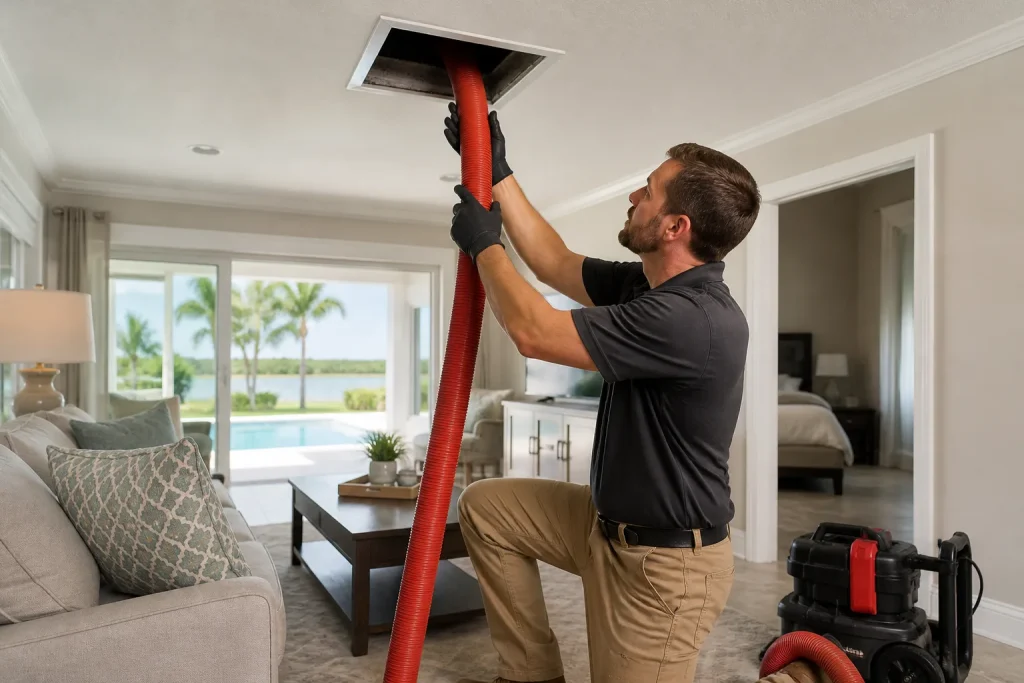
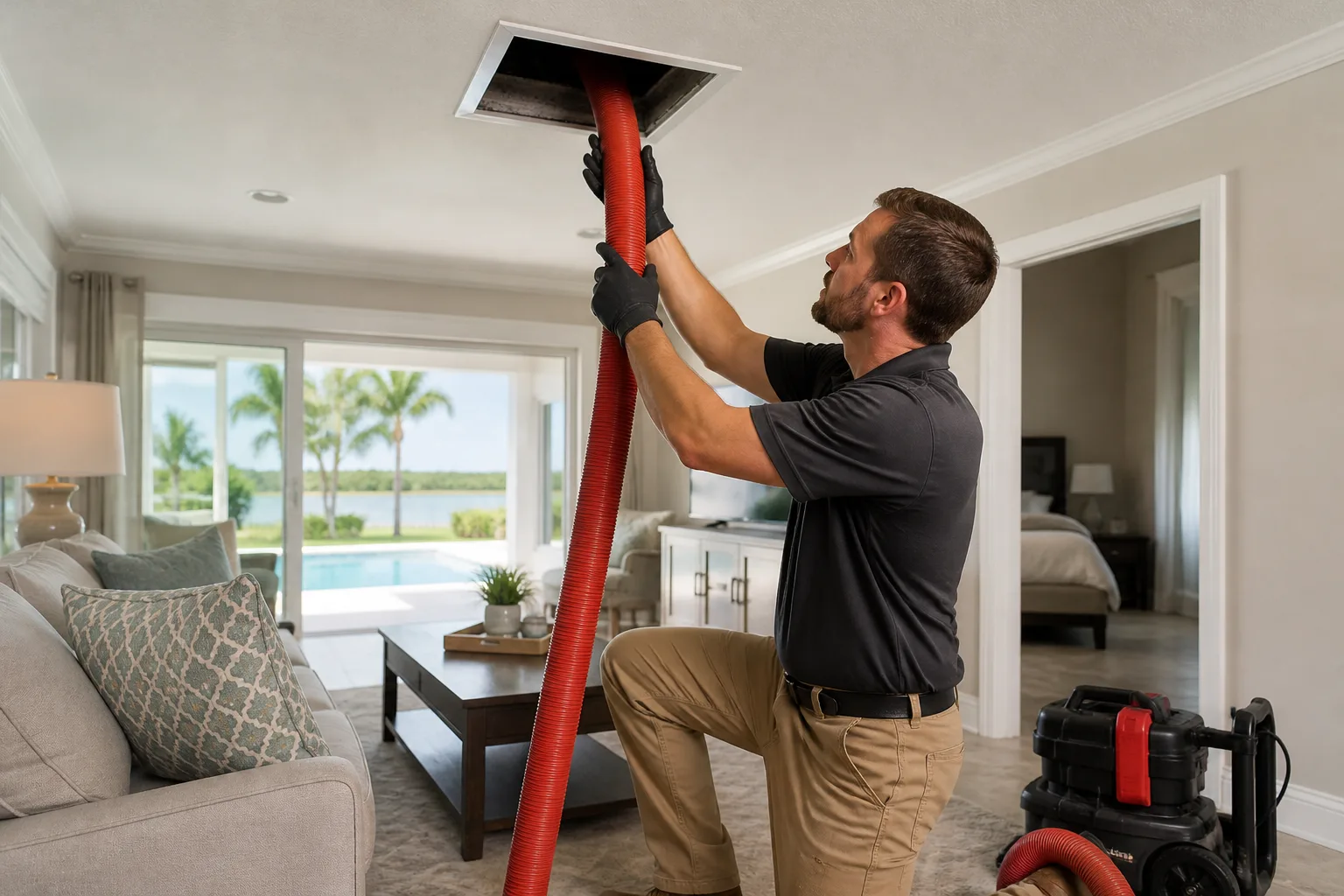
A “Honeywell air duct cleaning” isn’t a separate service. It’s air duct cleaning performed by a crew that knows how to work around branded IAQ equipment without damaging it. That second part is where a lot of visits go sideways. We’ve pulled up to homes where a previous crew ripped a media cabinet door off its hinges to reach the return drop, or bypassed a UV lamp and left the housing cracked. None of that is necessary when the technician knows what they’re looking at.
How Should a Pro Handle Your Honeywell Filter or Media Cabinet?
The media filter or electronic cells should come out before any cleaning begins, stored safely, and reinstalled at the end of the visit. That’s the short answer. The longer answer is about sequence, because the order of operations determines whether the cabinet gets cleaned properly or just gets dust blown past it.
Here’s how a professional visit should go:
- Power down the system and disconnect the air handler before touching any IAQ component. Electronic air cleaners hold a charge and need time to discharge after shutdown.
- Remove the filter or collection cells and set them aside in a clean area, not on the garage floor next to the mower.
- Inspect the cabinet interior for debris buildup, filter bypass gaps, and seal failures around the frame.
- Clean the cabinet and return plenum with brush contact and HEPA extraction, working toward the vacuum rather than against it.
- Service or replace the filter media depending on condition. A media filter that’s loaded with debris should be replaced at the same visit, not put back in.
- Reinstall everything correctly and confirm airflow before the technician leaves.
If your home has a Honeywell media cabinet, mention it when you book. Crews that show up expecting a standard 1-inch filter slot sometimes arrive without the right tools to open the cabinet cleanly. We use Rotobrush brush-contact systems and Abatement Technologies negative-pressure containment on these jobs specifically because the cabinet interior needs real agitation, not a quick pass with a shop vac.
Why Honeywell UV Lights Change the Cleaning Scope
A Honeywell UV germicidal lamp in the air handler requires a technician who knows not to bypass or strike the lamp housing during cleaning near the coil. That’s the practical reason to flag the equipment up front. The lamp sits inches from the evaporator coil, and the coil is exactly where debris and biological growth tend to accumulate in a Port St. Lucie system running hard through a long cooling season.
Cleaning near the coil means reaching past or around the lamp assembly. A technician using a stiff brush without watching the housing can crack the lamp, dislodge the mount, or leave the unit running while the bulb is exposed. Quality work in this area looks like:
- The UV lamp is powered down and, if the housing allows, carefully set aside.
- Negative-pressure containment is established before any agitation near the coil.
- The coil face and drain pan are cleaned with tools sized for the space, not forced.
- The lamp is remounted in its original position and tested before the technician leaves.
The Hometown Air Duct Cleaning approach uses Abatement Technologies negative-air equipment around the air handler for this reason. Containment keeps what comes off the coil from drifting into the living space while a technician works in a tight cabinet. If a crew shows up with a bare vacuum hose and no containment plan, that’s a conversation worth having before they start.
Do Honeywell IAQ Products Replace Duct Cleaning?
No. Honeywell IAQ add-ons improve what goes back into the air, but they don’t prevent debris from accumulating in supply and return ducts upstream. Cleaning and filtration are complementary, not interchangeable. This is the honest limitation most sales pitches skip.
Think about it this way. A high-efficiency media filter catches particles as air passes through it. But if the return duct behind the filter has been collecting debris for a decade, that debris is still sitting there, feeding small amounts of particulate back into the airstream every time the blower runs. Filtration handles what’s in the air. Cleaning handles what’s on the duct walls. Port St. Lucie homes with high summer cooling demand run their systems for long stretches, which gives dust, pollen, and construction residue plenty of time to settle on duct surfaces.
What filtration upgrades do well:
- Reduce the particle load reaching the coil, which helps keep the coil cleaner between service visits.
- Capture fine particulate that a basic filter slot can’t hold.
- Pair well with a cleaning visit, since the ducts are already open and accessible.
What they don’t do is remove settled debris from return and supply runs. That’s a mechanical job. One crew, one visit handles both when the company carries IAQ products alongside cleaning equipment. Aprilaire and Honeywell both make solid options, and choosing between them usually comes down to cabinet size and what the existing system is set up to accept.
What to Tell Your Duct Cleaning Company Before They Arrive
Give the company a clear inventory of your Honeywell or branded IAQ equipment when you schedule. That single step is the difference between a smooth visit and one where the technician improvises around equipment they don’t understand, which is also how equipment warranties end up in question.
Before the appointment, tell them:
- The brand and model of any media filter cabinet, electronic air cleaner, UV system, or whole-home purifier.
- Where each component sits in the system: return plenum, air handler closet, or duct run.
- Whether the equipment is under warranty, since some warranties specify qualified handling of components during service.
- Whether the filter media has ever been replaced, and whether you have a spare on hand.
- Any access issues such as a cabinet in a tight closet or a ceiling-mounted unit.
We ask these questions before a Port St. Lucie visit because the answers change what goes on the truck. A home with a Honeywell media cabinet and a UV lamp gets different access tools and a different containment setup than a bare system. When we also find damaged flex duct or a crushed return during the walkthrough, we repair it rather than document it and drive away. That repair capability is part of the reason we exist as a duct-system specialist rather than a general HVAC company.
When to Call a Pro
If you can see visible dust plumes from supply registers when the system kicks on, if your media filter is loading faster than it should, or if you don’t know whether your return ducts have ever been cleaned, it’s time for an assessment. DIY approaches with a shop vac and a long hose stir up more debris than they capture, and they can damage IAQ components in the process.
Related services in Port St. Lucie: if your appointment reveals a clogged dryer vent cleaning issue or damaged duct sections, we handle both. For a broader look at how we work in the area, see our Port St. Lucie page.
Frequently Asked Questions
No. Honeywell manufactures indoor air quality products such as media filters, electronic air cleaners, UV lamps, and whole-home purifiers. Duct cleaning equipment comes from manufacturers like Rotobrush, Nikro, and Abatement Technologies. When you book “Honeywell air duct cleaning,” you’re booking duct cleaning for a home that has Honeywell equipment installed, not a Honeywell-branded cleaning service.
Not when the technician knows the equipment is there. Filters and collection cells are removed before cleaning and reinstalled afterward, and UV lamps are powered down and carefully set aside before any work near the coil. The problems happen when a crew shows up unprepared for a branded cabinet. Mention your equipment when scheduling so the right tools arrive with the technician.
Often yes, especially if the media is visibly loaded or has passed its service interval. A cleaning visit is the natural time to swap media, since the cabinet is already open and the system is powered down. Your technician can confirm condition on site and let you know whether replacement makes sense now or can wait.
Probably, if the ducts haven’t been cleaned in several years. Purifiers improve the air passing through them, but they don’t remove debris settled on duct walls upstream. Cleaning and filtration work together. Our technicians have up to 15 years of experience assessing both and can tell you honestly whether your ducts need attention or whether filtration alone is doing the job.
The Bottom Line
“Honeywell air duct cleaning” really means duct cleaning for a home with Honeywell IAQ equipment, and the equipment changes how the visit should be handled. Filters and cells come out before cleaning and go back in after. UV lamps need careful handling near the coil. Filtration and cleaning do different jobs and neither replaces the other. Tell your cleaning company what’s installed before they arrive, and ask whether they have the tools to work around it.
If you’re in Port St. Lucie and want a crew that knows Rotobrush, Nikro, and Abatement Technologies equipment and can repair what it finds, we’re glad to help. Call (866) 502-9547 for a free estimate. We answer 24/7. Fast dispatch from 7am to 7pm, Sunday through Friday.
Written by the team at Hometown Air Duct Cleaning.
Need Air Duct Cleaning Help?
Call Hometown Air Duct Cleaning - licensed & insured, with free written estimates in Port St. Lucie.
(866) 502-9547